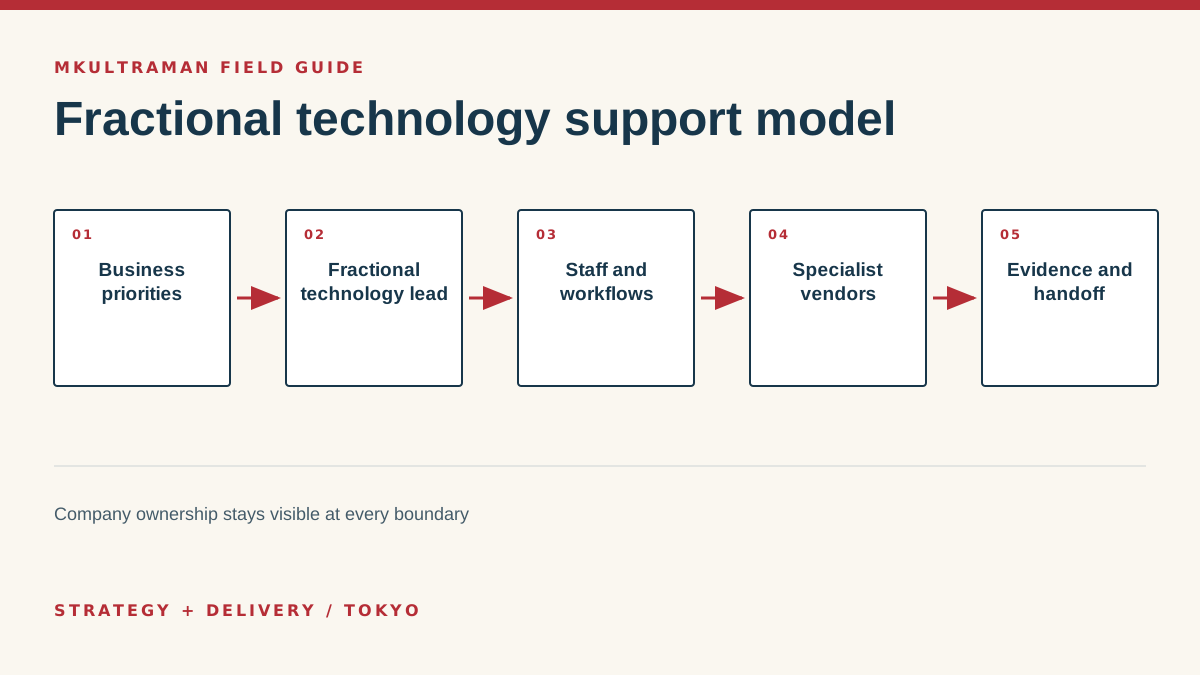
Understand what fractional technology support is
An SME can have important technology without needing a full-time technology executive. Websites, domains, email, customer systems, payments, cloud services, devices, analytics and vendors still require joined decisions. Fractional support provides a defined share of senior technology judgment and implementation capacity without pretending the adviser is an employee or a 24-hour support department.
The label covers several different services. A fractional technology leader helps set priorities, architecture, policy, budgets and vendor direction. A hands-on adviser may also configure systems, manage migrations and document operations. A managed service provider handles monitoring, endpoints, tickets and response under service levels. A project specialist delivers a defined change. These can cooperate, but a contract should not hide the differences.
Begin with the outcome. Perhaps domains and accounts have no clear owner, staff duplicate work across tools, a migration has stalled, vendors contradict one another, or leadership cannot see technology cost and risk. State what should be different in 90 days. “Look after IT” is too broad to price, govern or verify.
Know when the model fits
Fractional support fits when technology decisions cross business functions, recur often enough to need continuity, and do not yet justify a suitable full-time role. It also fits during a transition, such as a separation from an old provider, acquisition, office move, security reset or systems modernization.
It may not fit when the primary need is high-volume user support, around-the-clock incident response or a single specialized implementation. Those needs are better served by a help desk, managed provider or project team with explicit service levels. A fractional adviser can help select and coordinate them without claiming to be them.
Define scope, authority and boundaries
List the systems and decisions in scope. Separate advice, implementation, recurring administration, procurement, vendor management and incident coordination. State exclusions. Define who may approve spending, change production systems, create accounts, access personal data and communicate externally on the company’s behalf. Ambiguity expands risk rather than capability.
Set a cadence. A small engagement might include a monthly leadership review, a prioritized work queue and a limited implementation allocation. A transition may need weekly coordination. Decide how urgent issues are raised and what response, if any, is included outside scheduled work. If emergency coverage is required, buy it explicitly from a provider equipped to deliver it.
| Work type | Example | Boundary to define |
|---|---|---|
| Advisory | Roadmap, architecture, vendor comparison | Who makes the final decision? |
| Implementation | Website, identity or CRM change | Acceptance test and rollback |
| Administration | Users, licenses, renewals | Request and approval process |
| Support | User incident or device issue | Hours, response and escalation |
| Security response | Suspected account compromise | Authority, evidence and specialist escalation |
Keep ownership inside the company
The company should control its domains, DNS, primary email tenant, cloud billing and critical recovery channels. The adviser should use a named account with appropriate privileges rather than owning the only administrator identity. Keep a break-glass recovery method protected by the company. Record where contracts, invoices, exports and credentials are stored.
Access should match work. A website adviser does not automatically need payroll files. A CRM administrator may not need to change DNS. Review privileges after each project and when personnel change. These controls protect both sides by making authority visible.
Use the first 30 days to establish control
The first phase should produce an evidence-backed map, not a speculative shopping list. Inventory domains, hosting, email, identity, critical SaaS, devices, data stores, integrations, vendors, administrator accounts, billing owners, renewals and backups. Identify unsupported systems and single points of failure. Confirm observations by logging in, inspecting contracts or testing recovery where authorized.
Meet representative users. Ask what stops work, what they re-enter, which reports they distrust and who they contact when something breaks. Compare those accounts with leadership priorities. Technical debt that annoys one person is different from a failure that can stop revenue, expose personal data or lock the company out of its domain.
Create a short risk and work register. Each item should name consequence, evidence, owner, next action and target date. Separate immediate containment from durable improvement. For example, adding a second administrator may reduce today’s lockout risk, while moving ownership from a former vendor and testing recovery completes the repair.
Set governance and evidence
Use a lightweight decision record for consequential changes: the problem, options considered, decision, approver, expected effect, risks and rollback. Keep an access register for critical systems and an integration register for automated data movement. Maintain a renewal calendar with notice dates. These documents should be short enough to stay current and clear enough for a new operator.
Define completion in observable terms. A migration is not complete because data copied. Users can sign in, permissions are correct, records reconcile, integrations work, recovery is tested, old systems have a disposition and documentation is stored under company control. A vendor change is not complete until billing and old access are closed.
Report in business language
A monthly review should show completed outcomes, current risks, decisions needed, cost changes and the next priority. Technical detail belongs in supporting records. Leadership needs to understand what can affect customers, cash, staff, compliance or continuity. Avoid vanity counts such as number of tickets closed when they do not show whether the system improved.
Apply more governance to more consequential systems. A public design tool may need basic ownership and export. Payroll, primary identity and payments deserve narrow access, stronger recovery, reviewed changes and tested evidence. Proportionality keeps control practical.
Evaluate and manage a fractional provider
Ask candidates to explain a comparable operating problem without revealing client secrets. Listen for how they discover facts, make boundaries explicit, choose between repair and replacement, involve users, test work and hand it over. Product fluency matters, but the role requires translating among leadership, staff and specialist vendors.
Review conflicts and incentives. Does the provider receive reseller commissions? Are recommendations limited to platforms it sells? Who owns created code, configurations, documentation and accounts? What happens to access and work records at termination? Independence does not require avoiding every partnership, but material incentives should be disclosed.
Use an initial defined phase before a long retainer. A discovery and stabilization engagement can inventory the environment, repair urgent ownership gaps and propose a prioritized roadmap. Both sides then have real evidence about fit. Continue only when the recurring value and boundaries are clear.
Keep an exit path from the beginning. Require current documentation, company-owned repositories and recoverable accounts. Set notice and handoff terms. At least once a year, ask another authorized person to locate the system map, recover a key account and explain critical vendors. Fractional support is working when it reduces uncertainty and dependency while helping the SME make and implement better technology decisions.
Tips and practical checks
Small moves that prevent expensive cleanup
- Start with an access, ownership and renewal inventory before buying another platform.
- Separate project delivery, recurring administration and emergency response in the agreement.
- Keep domains, billing accounts and core administrator identities under company control.
- Require a decision log for consequential changes and a short runbook for recurring operations.
- Review open risks and completed outcomes monthly in business language, not only technical activity.
- Set an exit test: another capable person should be able to understand access, vendors, backups and current work from the documentation.
FAQ
Frequently asked questions
Is fractional IT support the same as an outsourced help desk?
No. A help desk handles user incidents and routine requests. Fractional technology leadership focuses on priorities, architecture, vendors, risk and delivery. One provider can offer both, but the service levels and responsibilities should be stated separately.
What size company benefits from fractional support?
Size is less important than coordination need. It can fit a small organization with several critical systems, vendors or projects that have no clear owner. A simple business with reliable managed support may not need it.
Should the adviser hold all administrator credentials?
No. The company should retain recoverable ownership of critical accounts. Named advisers can have role-appropriate access, preferably through individual identities, with offboarding and emergency recovery documented.
How should success be measured?
Use outcomes such as resolved ownership gaps, fewer manual handoffs, completed migrations, tested recovery, lower recurring cost, improved staff adoption and delivery against a prioritized roadmap. Ticket volume alone does not show strategic value.
Sources and further reading
Official references
Product features, prices, and Japanese requirements can change. Check the primary source before making a consequential decision.
- Cybersecurity Management Guidelines ↗ Ministry of Economy, Trade and Industry, Japan
- Cybersecurity resources ↗ Information-technology Promotion Agency, Japan
- NIST Cybersecurity Framework 2.0 ↗ National Institute of Standards and Technology
- Personal information protection guidance ↗ Personal Information Protection Commission, Japan
- SME support and investment resources ↗ JETRO