Business software and the SME tech stack in Japan
Digital business cards and meishi etiquette in Japan
Do digital business cards work in Japan? How meishi etiquette still applies, when to use Eight, Sansan or an NFC card, and how to follow up properly.
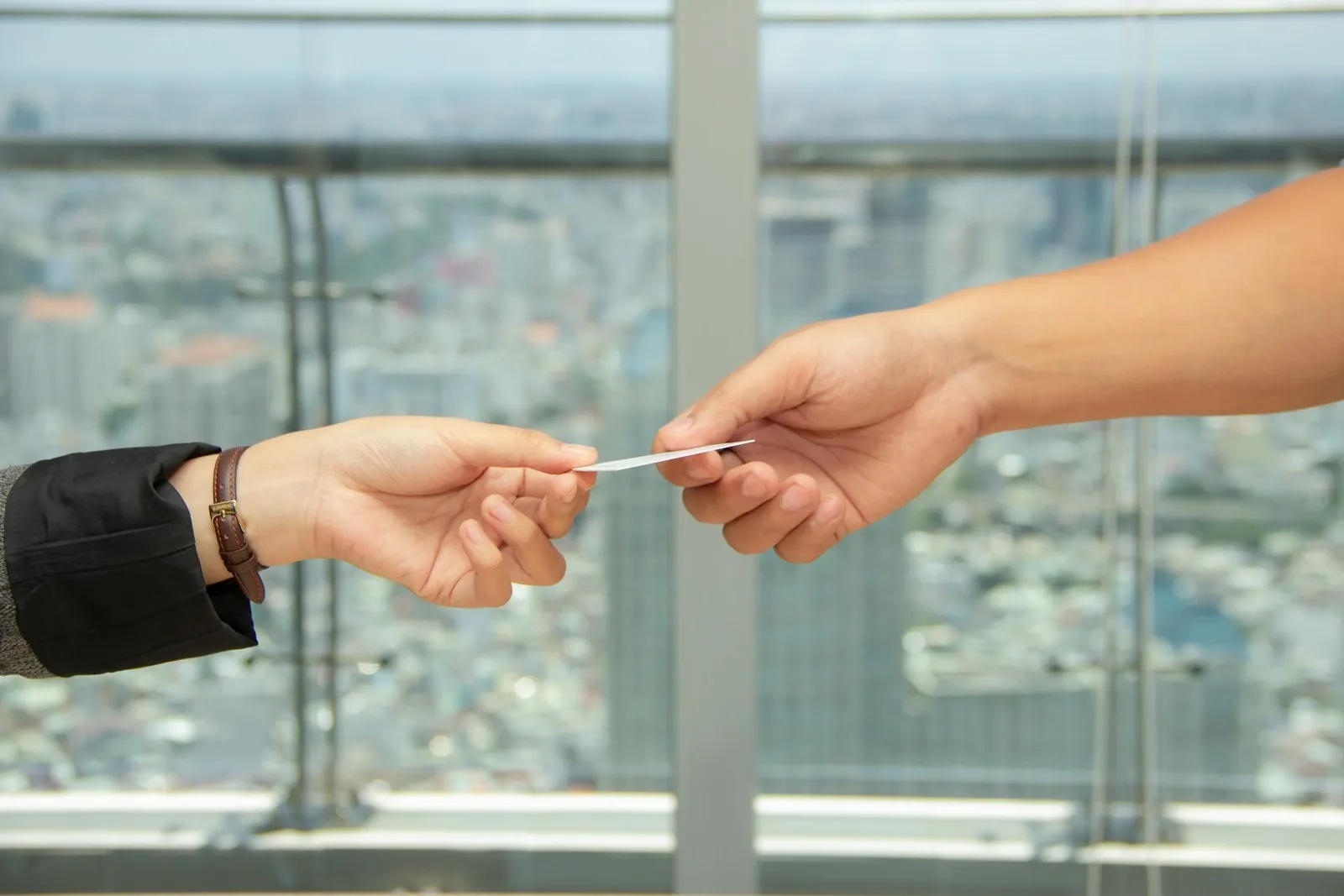
Digital business cards work in Japan, but they supplement the paper meishi rather than replace it. In most first meetings, especially with Japanese companies, you should still carry printed cards and exchange them properly. A digital card is useful alongside that: a QR code from Eight, an NFC card, or a profile link means the other person gets current details and a clear next step. For a company, the bigger gain comes from managing the cards you receive, which is what Sansan and similar tools are built for.
How does business card etiquette work in Japan?
The meishi exchange is still one of the first things that happens in a Japanese business meeting, and people notice when it is done carelessly. The essentials:
Offer with both hands. Hold the card by the top corners, text facing the recipient so they can read it, with a slight bow. State your company and name.
Mind the order. The visitor or more junior person usually offers first. When exchanging at the same time, hold your card slightly lower than theirs.
Receive with both hands and read it. Take a moment to look at the card. It is polite to confirm the name or title.
Keep it on the table. During the meeting, place the cards you receive on the table in front of you, arranged to match where people are sitting. The most senior person’s card often sits on top of your card case.
Do not write on it or pocket it casually. Put cards away in a card case at the end of the meeting. Writing notes on someone’s card in front of them, or stuffing it in a back pocket, reads as disrespect.
Bring enough. Running out of cards in Japan is an awkward start. If you work with both Japanese and international contacts, a double-sided card with Japanese on one side and English on the other is standard.
None of this changes because you also have a digital card. If anything, it is the reason to keep paper cards: the exchange is a ritual of introduction, and a phone held out across the table does not do the same job with many Japanese counterparts.
Do Japanese businesses use digital business cards?
Increasingly, yes, particularly since the shift to online meetings. The main options you will encounter:
Eight
Eight is Sansan’s business card app for individuals. It has long let users scan paper cards into a personal contact list, and it now puts a QR code on the app’s home screen so you can pass your details to anyone who scans it, including people who do not use Eight. If the recipient does not save the card, Eight can email the details to them afterwards. Because it is so widely used by Japanese professionals, Eight is often the easiest digital card to exchange with Japanese contacts.
Sansan
Sansan is the corporate version: a company-wide system for capturing, storing and sharing the business cards staff collect. Cards are scanned and turned into accurate contact records, and the organization can see who in the company already knows someone at a given client. It also supports online card exchange for virtual meetings, and Eight users can register exchanged cards into a company’s Sansan account. Sansan is a significant investment, better suited to sales-driven companies with many staff meeting clients.
NFC and link-based cards
Products such as Prairie Card and many international equivalents put a profile link on an NFC card or a QR code. Tapping it against a smartphone opens a page with your contact details, website, booking link and anything else you choose. They are handy at events and with contacts who are comfortable with them. They depend on the other person’s phone, so do not rely on them as your only card.
LINE
Exchanging LINE QR codes is common in Japan, particularly with small business owners and at informal events. It is useful for quick contact, but it links your personal account to a business relationship. If you do this often, a LINE WORKS or LINE official account is the better choice. I cover that in choosing between LINE, Chatwork, Slack and Teams.
What should a digital business card include?
A paper card captures your details on the day it was printed. A digital profile can stay current and can do more than list contact information. Keep it short and useful:
- Name in Japanese and English, title and company
- Company email and phone number
- Your website and a relevant page, such as a service or portfolio page
- A booking link, if you take meetings with new contacts (I compare the options in Calendly, TimeRex and Google Calendar booking pages)
- LinkedIn or another professional profile, if you actively use it
Resist adding every social account. The point is to make the next step obvious, not to show everything you have.
What happens to the cards after the meeting?
This is where most of the value is lost. Many businesses in Japan collect hundreds of cards a year, and most end up in desk drawers or in individual employees’ phones. When a salesperson leaves, their contacts leave with them.
Capture cards the same day. Scan them with Eight, Sansan or your CRM’s card scanner while you still remember the context. Add a short note on where you met and what was discussed.
Store them in a company system. Contacts from business meetings belong in a shared CRM or contact system, not only in a personal app. That can be Sansan, HubSpot, kintone or a well-kept shared contact list, depending on the size of the business. The guide to choosing a CRM for a Japan SME covers the options, and why CRM rollouts fail covers how to make one stick.
Follow up within a few days. A short email referring to the conversation, with the relevant link, turns a card exchange into a relationship. A digital card makes this easier because the other person already has your website and booking link. Introductions worth following up start at the event itself, which I cover in how to get useful introductions at Tokyo business events.
Treat card data as personal information. Names, titles and contact details on business cards are personal information under Japan’s Act on the Protection of Personal Information. Keep them in systems with proper access control, and do not add people to a marketing list just because you exchanged cards.
Paper and digital together
The practical approach for most people doing business in Japan is simple. Carry good bilingual paper cards and exchange them properly. Have a digital card ready for people who prefer it and for online meetings. And make sure every card you receive ends up in a system where the business can find it and follow up.
If your company’s contacts are scattered across card holders, personal phones and old spreadsheets, I can help you set up a contact and CRM system your team will actually use. If you are not sure where your customer information currently lives, start with a Diagnostics review.
Further reading: why CRM rollouts fail at Japanese SMEs · choosing between LINE, Chatwork, Slack and Teams · client communication rules that keep work moving