Websites, events and customer systems in Japan
How to get useful introductions at Tokyo business events
Most Tokyo networking events produce business cards, not results. What structured formats do differently, and how organizers and attendees can get useful introductions.
.jpg)
A useful business introduction in Tokyo starts with knowing what each person needs before they meet. Events that arrange meetings in advance, support both languages and keep the room to people who can make decisions produce far more follow-up than open mixers. For attendees, the difference comes from preparation and a prompt follow-up, not from the number of cards collected.
Why do so many Tokyo networking events feel unproductive?
Tokyo has no shortage of business events. There are chamber mixers, industry receptions, startup pitch nights and after-parties most weeknights. Many of them follow the same pattern: a crowded room, drinks, short conversations over background noise, and a stack of meishi at the end of the night. Plenty of the people in the room are there to sell, so a good share of the conversations are salespeople pitching to other salespeople.
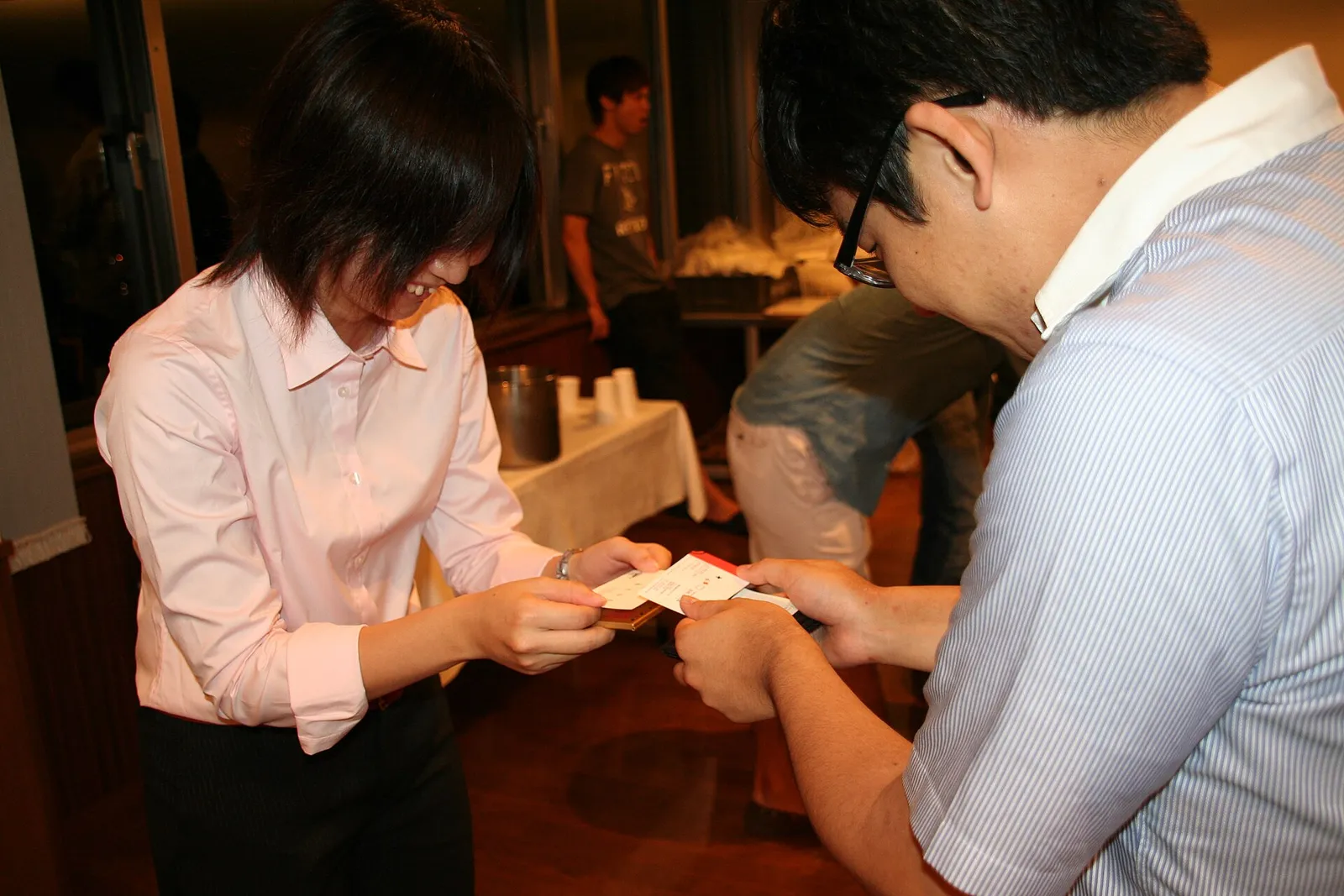
Japanese business etiquette adds another layer. Exchanging cards properly, polite introductions and the expectation that relationships build over several meetings all have real value. They also mean that a first conversation rarely gets to specifics. For foreign founders and executives who are in Tokyo for a limited time, or who do not speak much Japanese, an evening can pass without a single conversation that leads anywhere.
None of this is a reason to skip events. It is a reason to be selective about which ones you attend and deliberate about how you use them.
What makes a business event produce real introductions?
I spend a lot of my working time on the systems behind events. I built and maintain the website, domains, email, event and ticketing systems for The Delphi Network, a Tokyo executive events network, and I have produced events of my own since 2009. From that side of the room, the events that lead to real business share a few features.
A defined audience
The organizer knows who is attending and why. That might be a membership requirement, an application, a ticket price that filters for commitment, or simply a clear theme. When the audience is defined, attendees can prepare, and the proportion of useful conversations goes up.
Meetings arranged in advance
The strongest format I have seen pre-arranges short one-on-one meetings based on what each attendee says they are looking for. Startup Lady’s Global Connector Salon in Tokyo is one example: it pairs attendees for scheduled conversations and provides language support, so Japanese and non-Japanese participants can get to substance quickly. Pre-matching takes work from the organizer, but it replaces luck with intent.
Language support
Cross-border introductions often fail on language rather than interest. An interpreter at the table, bilingual staff, or simply pairing people with a shared working language removes much of the awkwardness that stops a conversation at pleasantries.
A speaker with specific experience
A speaker who explains how they actually did something, such as selling a hardware product overseas from Japan or entering the Japanese market from abroad, gives attendees something concrete to discuss. Generic motivational talks do not.
Good information before and after
Clear registration, an attendee list or profile where appropriate, and a follow-up email with contacts or resources all extend the value of a single evening. This is where event systems matter: ticketing, attendee data and communication tools determine whether the organizer can match people well and help them follow up. I cover the operations side in modern event management, and how to make the event easy to find in the first place in event promotion and search.
How should you prepare as an attendee?
Treat the event as a short project with a clear goal.
- Decide what you need. A distributor, a hire, an investor, a partner in a specific industry, advice on a specific problem. Say it in one sentence in both languages if you can.
- Research the attendees and speakers. If the organizer shares a list, pick the three or four people you most want to meet. If they offer matching, fill in the form carefully.
- Bring the right materials. Paper meishi still matter in Japan, ideally with Japanese on one side. A digital card or QR code helps with international attendees. I compare the options in digital business cards in Japan.
- Ask about the other person’s needs first. Introductions become useful when you can help someone, and people remember the person who connected them to what they needed.
- Follow up within a day. A short, specific message referencing the conversation and suggesting a next step. Connections that are not followed up quickly fade.
How should organizers run a better event?
If you run a network, a chamber, a community or a company event in Tokyo, the improvements are mostly operational.
- Collect useful information at registration: role, company, what the attendee wants from the evening, and preferred language.
- Use that information to pre-match meetings or seat people deliberately.
- Keep the attendee data in one place rather than scattered across a ticketing tool, spreadsheets and inboxes, so you can see who attends, what they want and who has not come back.
- Send a follow-up with resources and a way to reach the people they met, with attendee consent.
- Review what happened afterwards. Which introductions led to meetings? Which formats did people ask for again?
Many Tokyo organizations run events on a patchwork of tools that nobody chose on purpose: one service for tickets, another for email, a spreadsheet for members, and a separate payment account. That patchwork makes it hard to match people well or follow up. The Japan payments guide covers the options for event payments, and my Digital Baseline work covers joining the rest together.
Is in-person networking still worth it in Tokyo?
Yes. Trust in Japanese business still builds through meeting in person, and a good introduction from a respected third party opens doors that email cannot. What has changed is that the useful events are the ones designed around outcomes. The best combine good digital tools for registration, matching and follow-up with an in-person format that gives people time to talk properly.
Further reading: event registration, payment and check-in · how to make an event in Japan easy to find in search · digital business cards in Japan