AI adoption for businesses in Japan
Japan AI copyright law: what Article 30-4 means for business
Japan's Copyright Act Article 30-4 allows AI training, but AI outputs can still infringe. What businesses using generative AI in Japan should check.
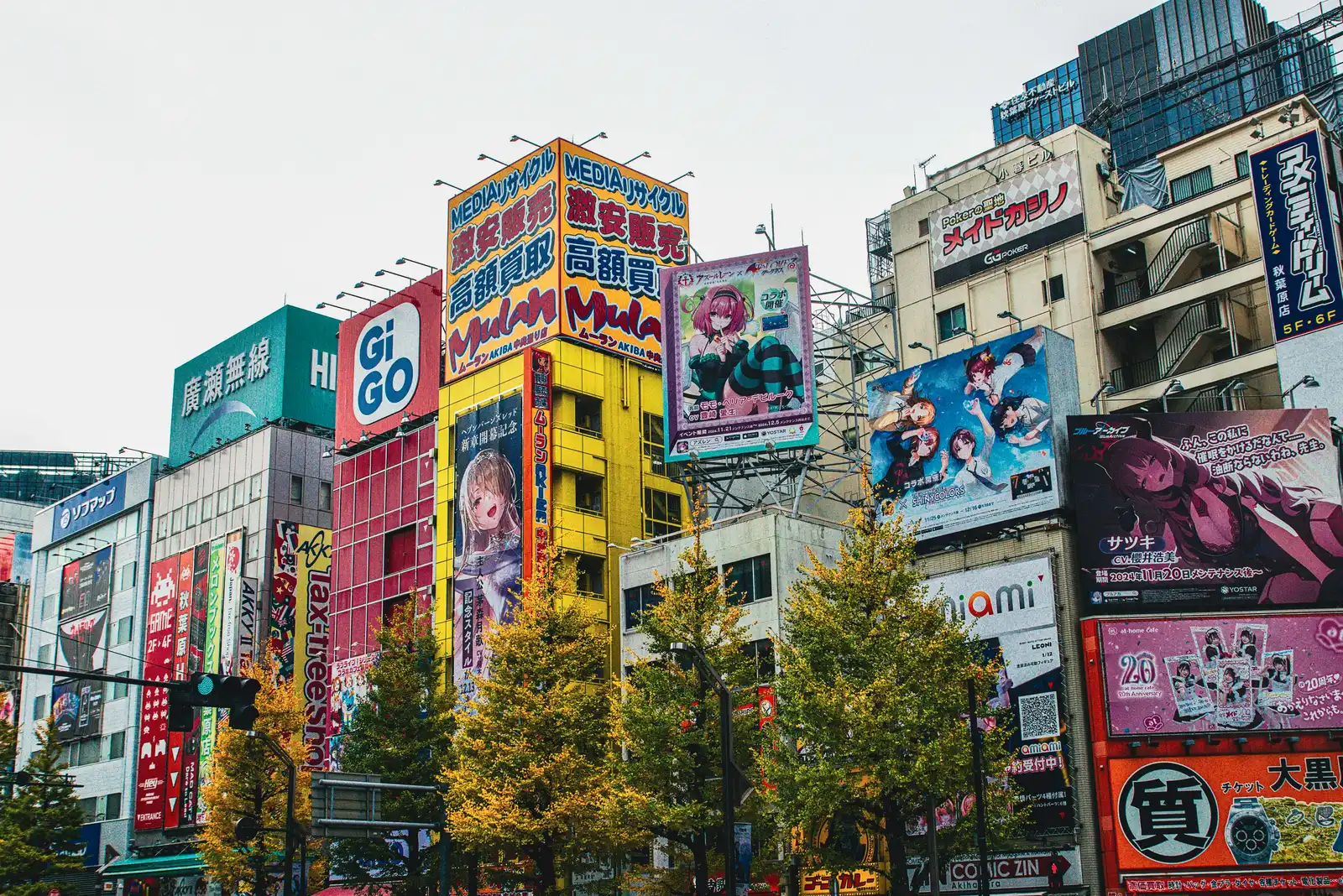
Japan’s Copyright Act Article 30-4 lets AI developers use copyrighted works to train models without permission, as long as the purpose is analysis rather than enjoying the works, and the use does not unjustly harm the rights holder. That exception covers training. It does not cover what you do with the output. If an image, text or video you generate with AI closely resembles an existing work and the work was relied on to produce it, publishing it can infringe copyright in Japan just as copying by hand would. For businesses, the practical risk sits at the output stage.
This matters more than it did a few years ago because AI-generated material now shows up everywhere in ordinary business: marketing images, blog posts, product descriptions, presentation slides and social media video. This post explains the rules in plain terms and what I would put in place. It is a practical overview, not legal advice. For a specific dispute or a high-value campaign, talk to a lawyer who works on copyright.
What does Article 30-4 of Japan’s Copyright Act allow?
Article 30-4 was added in the 2018 amendments to the Copyright Act (著作権法), which took effect in 2019. It permits use of a copyrighted work when the purpose is not to enjoy the thoughts or feelings expressed in it. Data analysis, including training a machine learning model, is the main example.
Two limits matter:
- Enjoyment purpose. If any purpose of the use is to enjoy the expression, for example training a model specifically so it reproduces the creative expression of particular works, the exception may not apply.
- Unjust harm. The exception does not apply where the use would unjustly harm the copyright holder’s interests, taking into account the type of work and how it is used.
In March 2024 a subcommittee of the Agency for Cultural Affairs published its General Understanding on AI and Copyright in Japan. It separates two stages. The development and training stage is where Article 30-4 does most of its work. The generation and use stage is judged by the ordinary rules of infringement.
When does AI-generated content infringe copyright in Japan?
At the generation and use stage, Japanese courts look at two questions:
- Similarity (類似性). Does the output reproduce the creative expression of an existing work? Sharing an idea, a style or a genre is generally not enough. Reproducing recognizable characters, compositions or passages can be.
- Reliance (依拠性). Was the existing work used to produce the output? If the work was in the model’s training data, or if the user supplied it or named it in the prompt, reliance may be found even when the user did not intend to copy.
When both are present, publishing, selling or distributing the output can infringe, and the person or company that used it is responsible. Using an AI tool does not move that responsibility to the AI provider.
This is why prompts matter. Asking a tool for “an original illustration of a friendly robot for our shop sign” is very different from asking for a character from a famous anime. Uploading a competitor’s brochure and asking for something “just like this” creates exactly the reliance a court looks for.
What was the Sora 2 controversy about?
In October 2025, shortly after OpenAI released its Sora 2 video app, social media filled with generated clips featuring well-known anime and game characters. Minoru Kiuchi, the minister responsible for intellectual property and AI strategy, said the government had formally asked OpenAI to prevent infringement, calling manga and anime irreplaceable treasures. Industry groups representing Japanese publishers and studios made similar requests.
Officials pointed to Japan’s AI Promotion Act, enacted in May 2025 and fully in force from September 2025. The Act sets out principles and allows the government to investigate and request cooperation, but it contains no financial penalties. It encourages AI use and relies on guidance and reputation rather than enforcement.
For businesses the lesson is straightforward. Japan is permissive about training AI, protective of its creative industries, and the existing Copyright Act still applies to what gets published. The fact that a tool can generate a famous character does not mean you can use the result.
Can a business own copyright in AI-generated content?
Possibly, but not automatically. Under Japanese law, copyright protects creative expression by a person. Output produced from a short prompt with little human creative input is unlikely to be protected. Where a person makes substantial creative choices, such as detailed direction, selection, editing and combining, the result is more likely to qualify.
In practice, do not assume you can stop others copying a logo, mascot or illustration that was generated from a simple prompt. For brand assets you want to protect, have a designer create or substantially develop them, and keep a record of the process.
What should businesses in Japan do when using AI?
Set a rule for prompts. Staff should not name specific works, characters, artists or copyrighted brands in prompts for commercial material, and should not upload other people’s work as a reference to imitate.
Check outputs before publishing. For images and video used in marketing, run a reverse image search and ask whether anything looks recognizably like an existing work. For text, check that long passages are not reproduced from a source.
Keep records. Save the prompt, the tool, the date and the edits for significant published material. If a question arises, you can show how it was made.
Read the vendor’s terms. Microsoft, Google and OpenAI offer copyright indemnities on some business plans, with conditions attached. Know which plan you are on and what you must do to stay covered. Free and personal accounts usually offer none. My guide to evaluating an AI vendor covers the other questions to ask.
Treat your own content as data. If you feed internal documents, customer data or supplier material into AI tools, copyright is only one issue. Personal information falls under APPI, and contracts with suppliers may restrict how their material is used. The Japan SaaS compliance guide covers those checks, and what to check before connecting business apps to ChatGPT covers connected tools.
Be careful with retrieval tools. A chatbot that searches documents and quotes them in answers can reproduce copyrighted text directly. If it draws on third-party material such as purchased reports or news articles, check your license allows it.
Does Japan’s approach help businesses adopt AI?
Largely, yes. Article 30-4 gives developers more certainty about training than many other jurisdictions, and the government’s stated aim is to make Japan an easy country to develop and use AI. For small businesses using tools rather than building models, that policy mostly means fewer obstacles to adoption.
It does not remove the ordinary obligations. The businesses that get into trouble tend to be the ones treating a generated image as free stock art. The ones that do well treat AI output like work from a fast but unvetted freelancer: useful, and checked before it goes out under the company’s name.
The bigger practical obstacles to AI adoption in Japanese SMEs are usually operational rather than legal, as I argue in why AI adoption stalls in Japanese SMEs. If you want help writing sensible AI use rules for your team and setting up the tools to match, I can do that as part of Ongoing Stewardship or a one-off implementation project.
Further reading: how to evaluate an AI vendor before you buy · how to get reliable work answers from AI tools · what to check before connecting business apps to ChatGPT · TetsuClaw: AI work OS for operators in Japan