AI adoption for businesses in Japan
Japan's care technology should support caregivers
Japan has invested heavily in care robots, but the care shortage is about people. How care providers can choose technology that reduces workload without replacing human contact.
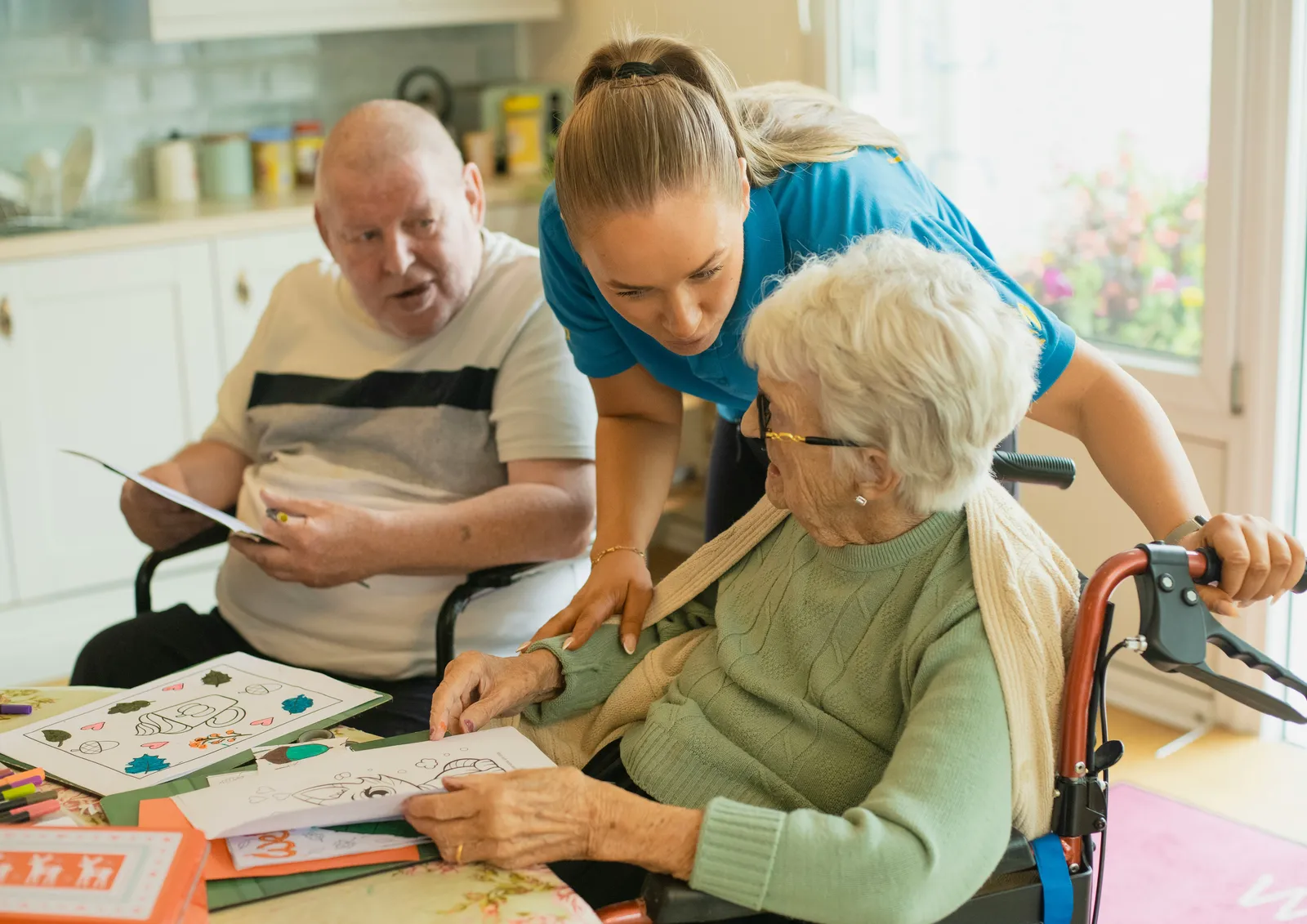
Care technology in Japan is most useful when it takes work off caregivers so they can spend more time with the people they care for. It is least useful when it is presented as a replacement for those people. Japan’s policy has leaned heavily toward robotics as an answer to the care shortage, and the results have been modest. For care providers, the practical question is simpler: does a tool help with a real task, without adding burden or removing contact someone needs?
How big is Japan’s care worker shortage?
The Ministry of Health, Labour and Welfare estimated in 2024 that Japan will need about 2.72 million care workers by fiscal 2040, roughly 570,000 more than it had in 2022. Care work is physically demanding and relatively poorly paid, turnover is high, and competition for workers from other sectors is intense. The shortage is part of the wider labor shortfall that affects most industries in Japan, but in care the consequences fall on people who cannot look after themselves.
Why has Japan focused on care robots?
Japan’s industrial policy has long treated new social problems as potential markets. Aging fits that pattern. Under the banner of Society 5.0, a vision of a technology-driven “super smart society,” government strategy has promoted robotics, sensors and data as ways to keep care services running with fewer people. Public funding has supported the development and introduction of care robots since the 2010s, and large electronics and automotive companies have explored eldercare as a growth area.
The logic is understandable. If there are not enough caregivers, automate part of the work. It also avoids some politically difficult questions: how much care workers are paid, how many foreign workers Japan admits, and how families, especially women, are expected to combine careers with caring for relatives.
People sometimes explain Japan’s interest in robots through culture, pointing to Shinto animism or affection for Astro Boy. I find that explanation too convenient. The push has come mainly from industrial and fiscal policy, not from families asking for machines.
What happened to the famous care robots?
The best-known example is Robear, a bear-faced prototype developed by RIKEN and Sumitomo Riko and shown in 2015 lifting a person from a bed into a wheelchair. It became a widely shared image of Japan’s approach to aging. Like many research prototypes, it did not become a common sight in care homes.
That outcome is typical. Lifting aids, monitoring sensors and communication robots have found some use, but large, complex robots are expensive to buy and maintain, need space and training, and often do not fit the unpredictable reality of a care home at night. Staff who are already stretched do not adopt tools that make their shift harder.
What are the risks of a technology-first approach?
Monitoring and privacy
Sensors in rooms, wearable devices and camera systems can alert staff to falls or changes in behavior. They also collect intimate data about people who may not fully understand or consent to it. Care providers need to know who owns that data, where it is stored, who can see it and how it is used. Japan’s Act on the Protection of Personal Information treats health information as sensitive, and families increasingly ask these questions.
Less contact, not more
Care is not only lifting, bathing and feeding. Conversation, attention and a familiar face matter a great deal to wellbeing. A talking robot or an AI companion may help some residents, but when technology is used to reduce staffing rather than free up time, the likely result is more isolation. Deciding which work stays with people is the same question every business faces with AI, which I cover in what work should stay with people when your business uses AI.
Money spent in the wrong place
Every yen spent on equipment that sits unused is a yen not spent on wages, training or better working conditions, which are the things most likely to keep caregivers in the job.
Where does technology actually help care providers?
The tools that tend to earn their place are less dramatic than robots.
- Records and reporting. Care staff spend a large share of their time on documentation. Tablet-based care records, voice input and shared systems that remove duplicate entry return hours to direct care.
- Scheduling and handover. Shift planning, visit routes for home care, and clear handover notes between shifts reduce mistakes and overtime.
- Communication with families. Secure messaging, often through LINE or a care provider’s own app, replaces phone tag and gives families confidence.
- Selective monitoring. Sleep and fall sensors can reduce unnecessary night rounds when residents and families have agreed to them and staff know how to respond to alerts.
- Physical aids. Lifting assist devices and transfer aids that protect caregivers’ backs, chosen with the staff who will use them.
The Japanese government also subsidizes the introduction of care technology, including software and devices. The subsidy should follow the need, not decide it.
How should a care provider choose technology?
Start with the work, not the product. Ask staff which tasks take the most time, which cause the most stress and where errors happen. Involve residents and families where the tool affects them. Trial one change on one unit before rolling it out, and measure what matters: time returned to care, fewer incidents, staff who stay.
This is the same approach I recommend to any small organization deciding on new systems, and I explain why procurement so often goes wrong in technology adoption in Japan fails at procurement. If you run a care business and want an outside review of your tools and workflows before investing, my Diagnostics engagement maps what you have and ranks what to fix first.
Japan will need technology to keep care services running as the population ages. The test is whether that technology supports the people doing the caring and respects the people being cared for.
Further reading: what rural Japan needs from big technology investment · what work should stay with people when you adopt AI · Japan’s labor shortage is also a work-design problem · foreign workers need functioning local support