Japan economy, policy and society
Osaka Expo and the case for measuring lasting value
The Osaka Expo drew big crowds and ended with an operating surplus. The harder questions are about public cost, the 1970 comparison and what actually lasts.

I wrote the first version of this post in April 2025, as Expo 2025 Osaka, Kansai was opening on Yumeshima, the artificial island in Osaka Bay. At the time the story was cost overruns, unfinished pavilions and weak advance ticket sales. I was skeptical, and I said so.
The Expo ran from April 13 to October 13, 2025, and by its own measures it ended well. It drew about 25.6 million visits over 184 days, closing weeks were so crowded that queues became the story, and the organizers projected an operating surplus of more than ¥20 billion. It would be dishonest to pretend otherwise. But attendance and ticket revenue answer only one question. The ones I cared about were different, and most of them are still open.
Why the 1970 comparison did not fit
Much of the case for the Expo leaned on memories of the 1970 Osaka Expo. Al Jazeera’s pre-opening piece, “Japan’s Expo 2025 revives memories of Tokyo Olympics cost blowout,” captured both the cost worries and that nostalgia.
The 1970 Expo celebrated a country in the middle of its high-growth era: a young, expanding population and manufacturers such as Sony and Honda becoming global names. The event matched the moment. Japan in 2025 was a different country, with a shrinking and aging population, decades of weak wage growth and a corporate sector struggling with labor shortages and digital adoption. Invoking 1970 as a model risked treating a mood as a strategy.
The format itself raised questions. World Expos were built for an age when seeing another country’s technology meant traveling to a pavilion. Today most innovation is shared through networks, open platforms and products people use directly. The official theme, “Designing Future Society for Our Lives,” was broad enough to mean almost anything, and many exhibits were familiar fare: AI demonstrations, smart city concepts and sustainable architecture.
The cost record
The construction budget for the venue rose to as much as ¥235 billion, nearly double the original estimate, driven by material and labor costs. That figure covered the site itself, not the wider public spending on transport links and land preparation. The bill was split between the national government, Osaka Prefecture and City, and the business community.
This pattern was not new. The Tokyo 2020 Olympics finished well above their original bid budget. In the run-up to Osaka, several countries scaled back or delayed their pavilions, some withdrew, and construction ran into a shortage of skilled workers made worse by the 2024 cap on overtime in the building trades.
The operating surplus is a real achievement for the organizers, and the final weeks were genuinely popular. It does not settle the broader account: whether the public money spent on the site and its infrastructure produced lasting value that would not have come some other way.
Opportunity cost
This was my central objection, and it still stands. The same sums could have gone into things with long-term payoffs for an aging, labor-short economy: regional digital infrastructure, childcare, support for small businesses adopting better systems, or training for the workforce that will run them.
Choosing a six-month showcase over those options was a political decision. It favored a highly visible, centralized event with construction contracts and a clear opening day over slower, less photogenic work spread across the country.
What remains on Yumeshima
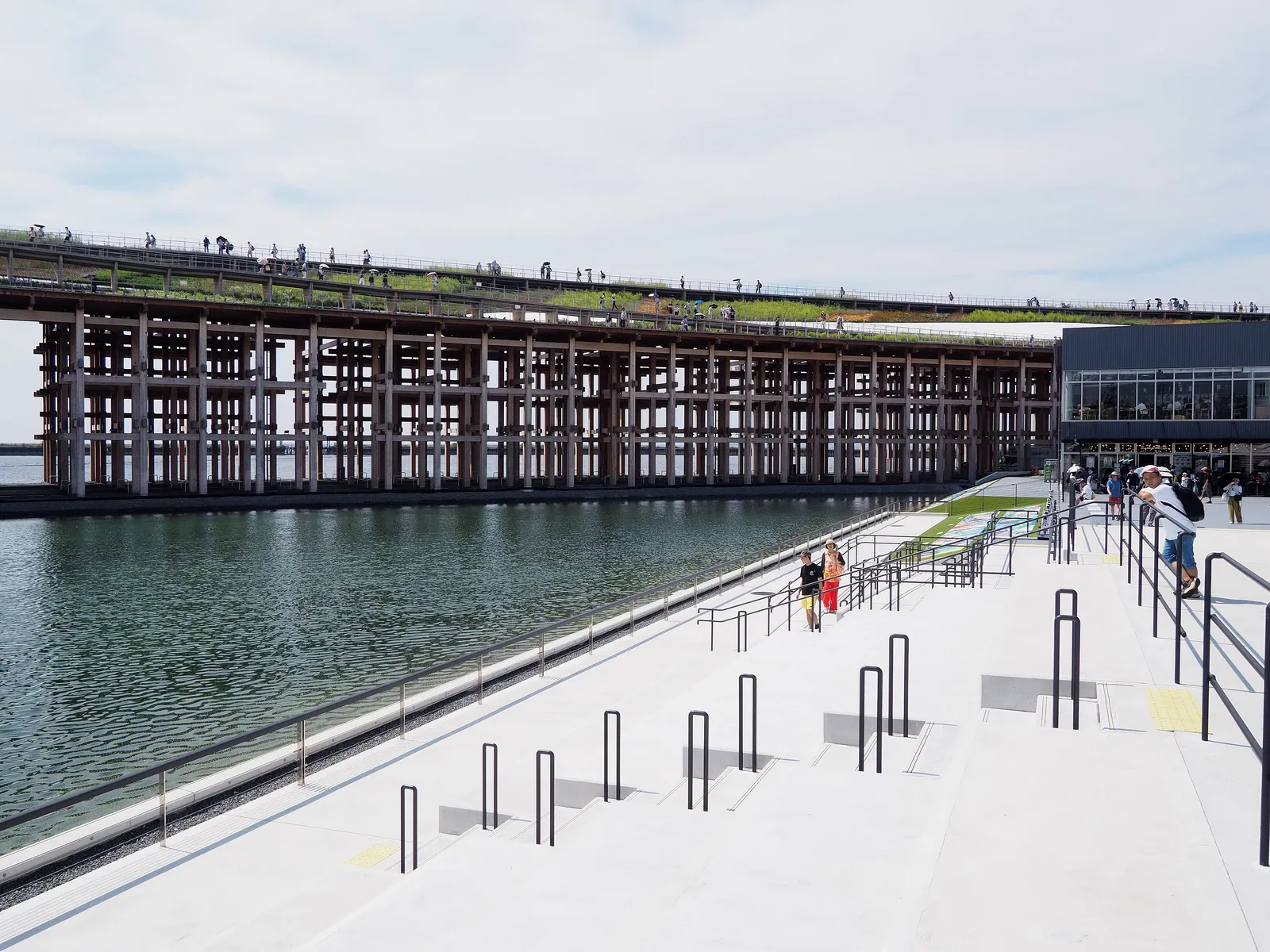
A fair test of a megaproject is what is left afterward. A 200-meter section of the Grand Ring, the enormous timber structure that became the Expo’s signature, is being kept for a memorial park, and some of the timber is being reused elsewhere, including for housing in areas hit by the 2024 Noto Peninsula earthquake. That is a thoughtful outcome.
The larger legacy is the island’s next use. Yumeshima is being developed for an integrated resort with a casino, currently expected to open around 2030, and the Expo helped justify the transport and site work that project needs. Whether that is a good use of public infrastructure is a debate Osaka will be having for years, and it is a different question from whether the Expo was fun to visit.
Where the future is actually being built
The part of my original argument I would keep without qualification is where Japan’s renewal comes from. It is not mainly in national showcases planned in Kasumigaseki and executed by large contractors. It is in the towns and prefectures that the centralized model left behind.
There, smaller operators are reopening old buildings as lodging, setting up bases for remote workers, rebuilding local tourism around what makes a place distinct and connecting their bookings, payments and customer records properly for the first time. The founders doing this tend to be digitally fluent, comfortable working with international customers and less attached to the old corporate hierarchy. Their projects rarely make international headlines, but they are where much of Japan’s practical future is being worked out.
Measuring lasting value
The Expo proved that Japan can still stage a large international event and fill it with visitors. That was never really in doubt. The question worth asking of any megaproject is what it leaves behind that people can use: skills, infrastructure, businesses, habits of working. By that measure, Osaka’s Expo deserves a more careful audit than the attendance figures alone suggest, and the next big showcase should be planned with that audit in mind from the start. The same test applies to much smaller projects, such as Bitcoin mining pitched as grid support.
Further reading: economic frustration and blaming foreigners · when Japan’s political debate avoids the operating problem · Japan business execution in 2026 · Aizu strategy for rural Japan