Japan economy, policy and society
Japan's reputation and the experience behind it
Japan's international appeal can bring people to a product, place or event. It cannot ensure that they can find information, make a booking or get a useful answer.
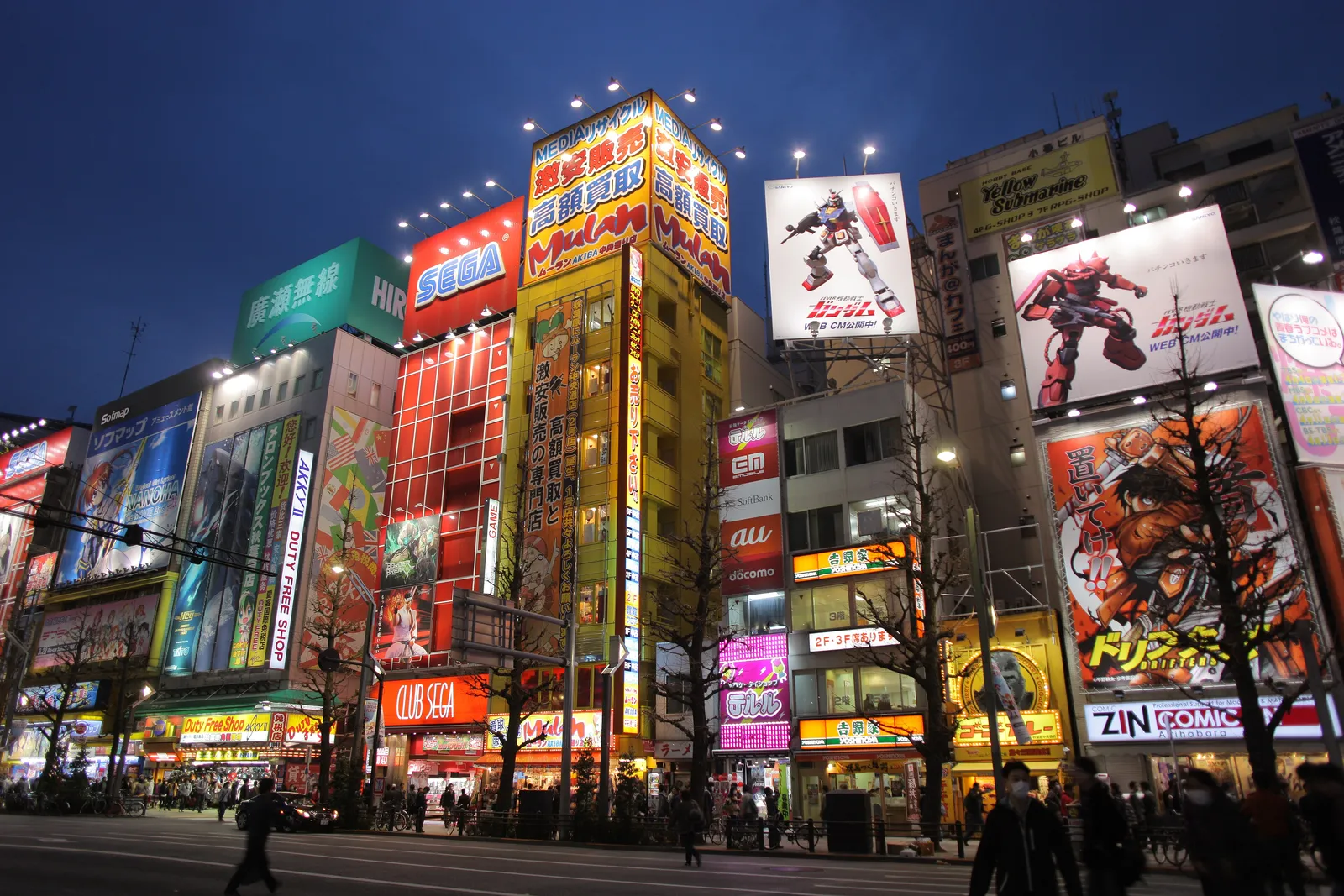

Ask people abroad to describe Japan and you often get one of two pictures. The first is bright and playful: anime, games, robots, neon and cute characters. The second is gray and tired: exhausted salarymen, rigid hierarchy, fax machines and long nights at the office. The first is the world of “Cool Japan.” The second is the lingering image of “Japan Inc.”
Between them, those two pictures make up much of Japan’s national brand. They make the country look either permanently young or prematurely old. Both are partly true, and both leave out the part of Japan most people actually live in.
The Cool Japan image
For more than two decades, youth culture has been Japan’s most successful soft power export. The government formalized this with its “Cool Japan” strategy in the early 2010s, promoting pop culture, food and design abroad and setting up a public investment fund to back it. The fund’s commercial record has been widely criticized, but the image it promoted was already spreading on its own.
Anime and manga lead that image. They have built a global market worth billions of dollars and put Japanese aesthetics into everyday life far beyond Japan. Games, character goods, kawaii design, J-pop and street fashion add to the same picture: imaginative, playful and a little fantastical. I have written separately about how cuteness makes room for play in adult life, which is part of why this image travels so well.
The Japan Inc. image
The other picture is older and more stubborn. It grew out of the high-growth era and hardened during the long economic slowdown. At its center is the salaryman in a dark suit, devoted to the company above family and self.
The vocabulary that went global with it is revealing: karoshi (death from overwork), the hanko seal, the fax machine, seniority promotion and lifetime employment. Each describes something real. Together they suggest a society held in place by old systems and unwilling to change, a picture that shapes how investors, potential employees and partners see the country.
A media mirror that reflects the extremes
Japan’s own media often reinforces the split. Japanese TV dramas tend to swing between two poles. Prime-time corporate dramas show whistleblowers fighting corruption or newcomers battling a cynical company. When the story is not about work, it is often a high school romance or pure fantasy.
What is less common is a story about free, complicated adults making their own way. Characters are usually defined by their relationship to a large external force: the company, or a fated romance. That reflects only the edges of Japanese life, and it helps explain why the country’s image abroad jumps between the two stereotypes.
Why the gap matters in practice
This is not only a question of perception. It shows up in a very concrete way when people act on Japan’s appeal.
Someone abroad falls for Japanese food, design or a particular region through the Cool Japan image. They decide to visit, buy, invest or partner. Then they meet the Japan Inc. side of things: a website with no English, a booking process that ends with a phone number, a payment system that does not accept their card, an inquiry that goes unanswered for weeks, or a form that has to be printed and faxed.
The reputation brought them to the door. The experience behind it did not let them in. I see this regularly with small hotels, restaurants, producers and event organizers. Their product is excellent and the interest is real, but the practical path to buying is broken. A clear website, online booking and payment, and someone who answers messages promptly often do more for international demand than any national campaign.
The costs of a two-sided image
The split affects Japan in other ways too:
- Talent: skilled people abroad may love Japanese culture and still hesitate to work here because they expect the Japan Inc. version of working life, and the cost of staying is rising.
- Investment: a picture of rigid, slow companies can hide the parts of the economy that are changing quickly, such as utilities testing flexible loads on the power grid.
- Tourism: visitors come for the pop culture image and crowd the same few places, missing most of the country.
- Domestic self-image: young Japanese people can end up feeling that the only options are fantasy or the company.
The missing middle
For Japan’s national brand to mature, it needs to tell stories from the large middle ground where most adults actually live. That includes people running small businesses in regional towns, craftspeople adopting new tools, engineers at startups, farmers selling directly online, parents balancing work and family, and the growing number of foreign residents building lives here.
That Japan is less dramatic than either stereotype. It is also more accurate and more appealing to the people the country most needs to attract. The brand gets people to look. What they find when they try to take part is what decides whether they stay.
Further reading: cuteness, play and adult life in Japan · tourism in Kyoto: behavior, capacity and clear information · the digital facade of Japan Inc. · Japan business execution in 2026