Japan economy, policy and society
Bitcoin mining and grid flexibility: questions before investment
A flexible electricity load can help a power grid. That alone does not make a Bitcoin mining project in Japan profitable, low-carbon or needed at a given site.

Bitcoin mining has a new pitch. Instead of being described as a speculative energy hog, it is increasingly presented as grid infrastructure: a large, controllable load that can soak up surplus power and switch off when the grid is under strain. In late October 2025 the mining hardware maker Canaan announced a small contract in Japan built on exactly that idea. It is worth looking at both the concept and the announcement, because the gap between them is where the useful questions sit.
Why miners talk about “flexible load”
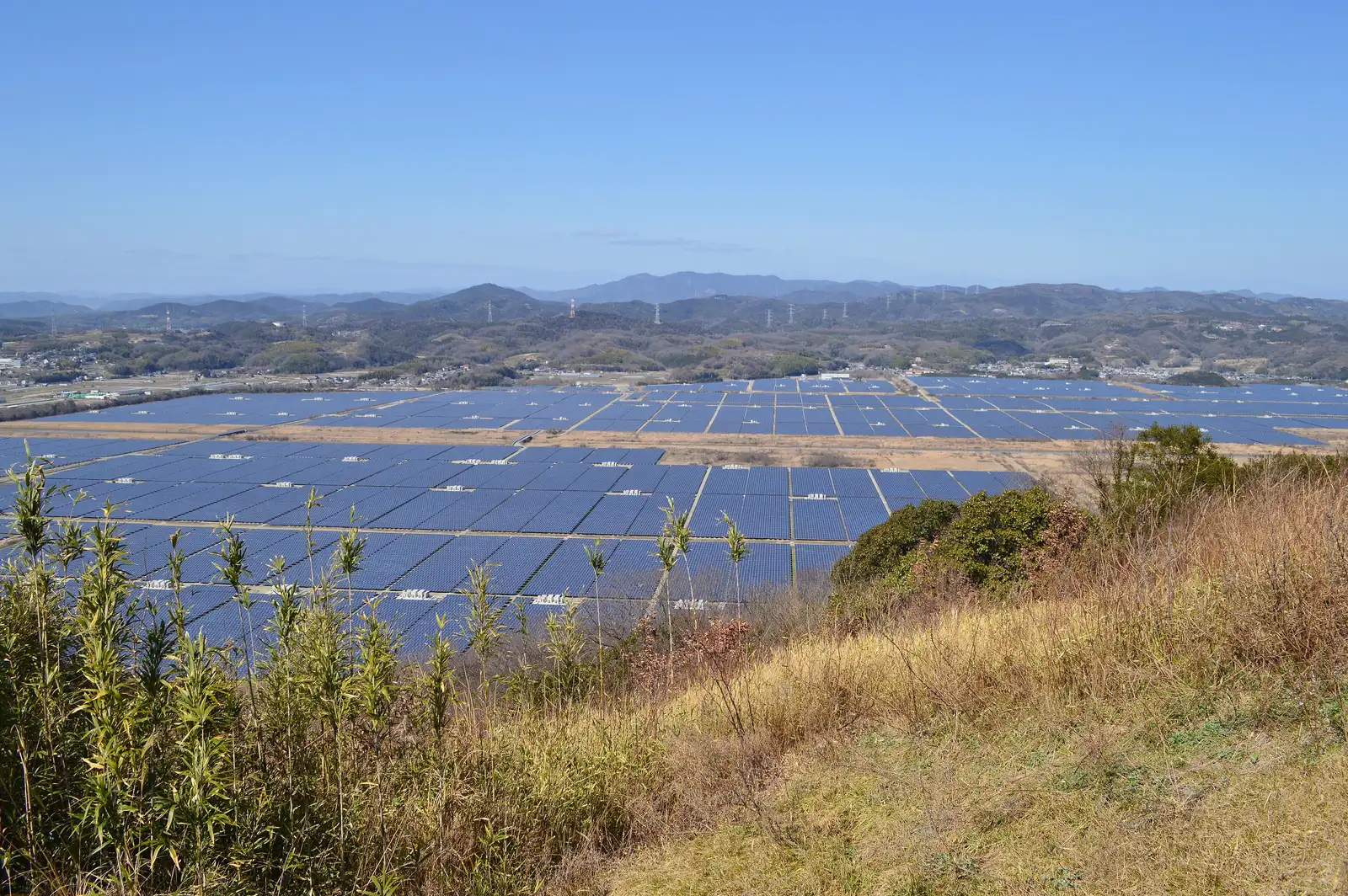
A power grid has to match supply and demand every second. Wind and solar complicate that, because they produce when the weather allows rather than when people need electricity. On sunny spring days in Japan, solar output can exceed what the local grid can absorb or move, and operators respond with curtailment: they tell generators to stop feeding power in. That electricity is simply lost.
A mining facility is an unusual customer. It draws a lot of power, it does not care what time of day it runs, and it can ramp up or down very quickly. In theory that makes it a buyer of last resort for power that would otherwise be curtailed, which improves the economics of the renewable project next to it. The same logic is applied to stranded energy, such as gas at remote oil wells that would otherwise be flared.
What the Texas experience shows
Texas is the usual example. The state’s grid operator, ERCOT, runs demand-response programs in which large loads, including miners, are paid to cut consumption when the grid is tight. During heat waves and winter storms, that dropped load has the same effect as adding generation. Supporters argue this reduces the need for expensive peaker plants that run only a few hours a year.
The picture is not purely positive. The same flexibility payments have drawn criticism that miners are compensated for power they never use, and large mines have caused local conflict. The Texas Tribune’s reporting on one mine’s noise and grid role shows how both sides of that argument play out in a single town.
Could geothermal and mining work together in Japan?
Japan has one of the largest geothermal resources in the world, usually ranked third behind the United States and Indonesia, yet uses only a small fraction of it. Much of the best resource sits inside national parks or near onsen towns, where operators and residents worry that drilling could affect the hot springs their local economy depends on. Conventional plants also need high temperatures and large, centralized developments that do not match Japan’s scattered, community-scale resources.
Smaller binary-cycle plants, which generate electricity from lower-temperature water, are one response. Developers such as Baseload Power Japan work with local communities and onsen owners on this model. A flexible load placed next to such a plant could, in principle, buy output when the grid cannot take it and give a small project steadier revenue. That is an interesting idea. Whether it pays depends on the plant’s output, grid connection terms, hardware costs and the Bitcoin price, none of which a concept can settle.
What Canaan actually announced
Canaan’s press release described a 4.5 MW sales contract for hydro-cooled Avalon mining servers that would be overclocked and underclocked to respond to grid fluctuations. It said the equipment would support a regional utility, with an electrical engineering firm operating the servers, and that deployment would begin by the end of 2025.
The release did not name the utility or the site. That leaves a lot of room for interpretation.
Who might the utility be?
Japan has ten regional electric utilities. They are investor-owned companies rather than state bodies, although TEPCO has been under substantial government ownership since the Fukushima Daiichi disaster. TEPCO is also the utility with the most visible mining experiment: its subsidiary Agile Energy X has placed mining machines beside solar farms in Gunma and Tochigi to use power that would otherwise be curtailed. That makes TEPCO a natural guess, but it is only a guess. Several regional utilities face serious curtailment, particularly in Kyushu, and any of them could be exploring the same idea.
What does 4.5 MW mean?
It is small. Large mining sites in Texas run to hundreds of megawatts. A 4.5 MW installation will not change grid stability across a region. It is a pilot, and pilots are legitimate. A utility may want to test response times, control software and operating costs before committing to anything larger. A manufacturer may want a reference customer in a new market. Both motives can be true at once.
Questions I would want answered
I find the concept of using flexible computing load to absorb curtailed renewable power genuinely compelling. I am less interested in the slogan than in the implementation. Before treating this project as evidence of anything, I would want to know:
- Location: Is the equipment sited where curtailment actually happens, or somewhere convenient?
- Control: Does the grid operator dispatch the load directly, or does the operator follow price signals on its own schedule?
- Economics: Who carries the hardware and Bitcoin price risk, and what happens to the machines if mining stops paying?
- Alternatives: Would batteries, pumped hydro, better interconnection or other flexible loads such as data centers do the same job more reliably?
- Scale: Is there a plan beyond the pilot, or is this a one-off experiment?
The idea is sound enough to test. A small announcement with no named partner or site is not yet proof that it works in Japan, and anyone considering investing in similar projects should ask for those details first. It is the same gap between a stated purpose and what a measure actually does that runs through Japan’s departure tax and the Osaka Expo’s legacy.
Further reading: Osaka Expo and the case for measuring lasting value · a departure tax does not solve crowded streets by itself · Digital infrastructure as a business asset in Japan · Where overlooked value sits in the Japanese market