Akiya, property and regional Japan
What Japan's craft workshops need to stay in business
Japan's traditional crafts are shrinking because too few workshops earn a living. Pricing, direct sales, product fit and succession matter as much as skill.
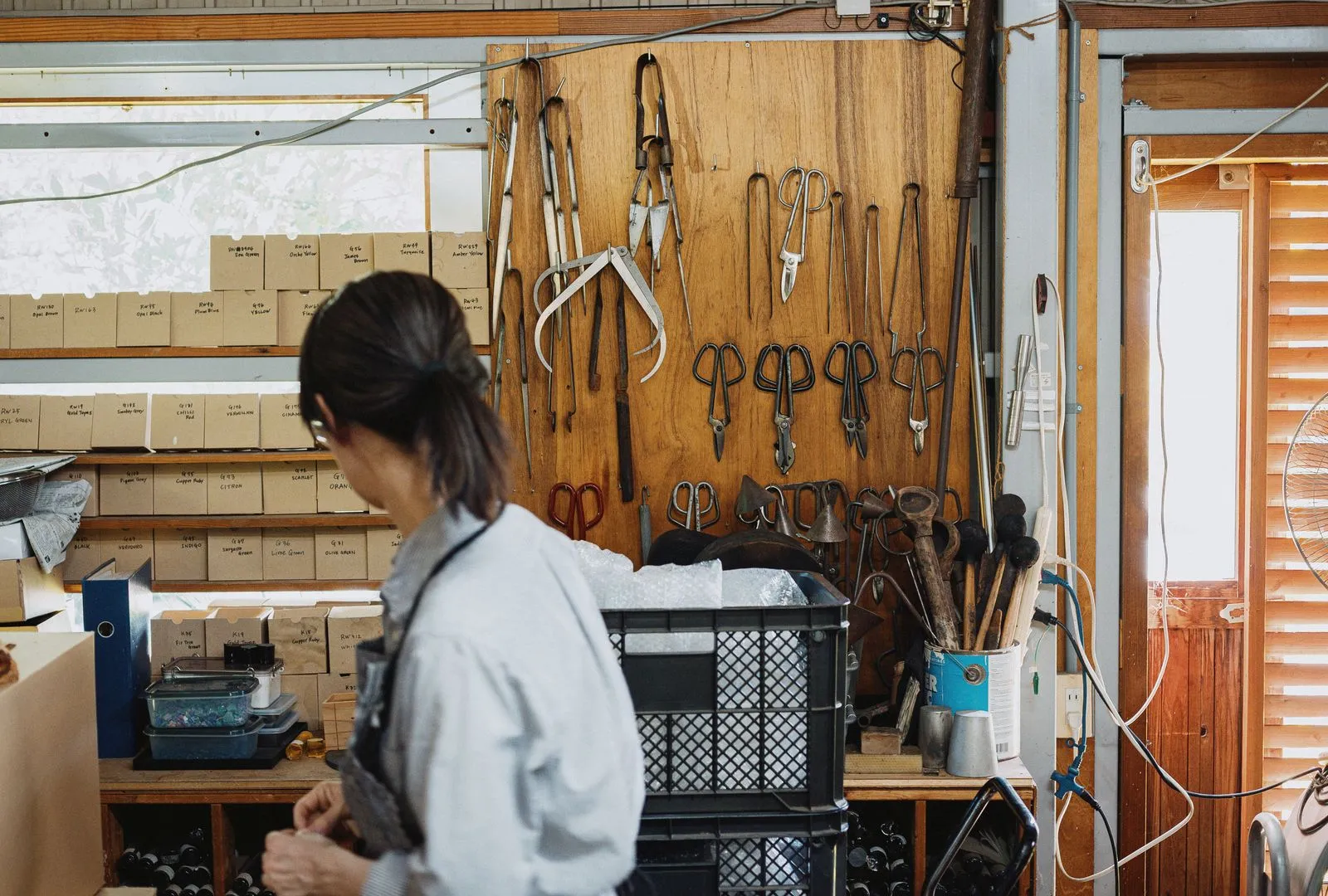
Japan’s traditional crafts are not disappearing because the work got worse. They are disappearing because too few workshops earn enough to pay a successor, train an apprentice or reach buyers beyond a shrinking local market. Preserving a craft means keeping its makers in business: pricing that covers the hours, a direct route to customers, products that fit how people live now, and a plan for who carries the work on.
How fast are Japan’s traditional crafts declining?
The government keeps a list of officially designated traditional crafts (伝統的工芸品) under a 1974 law, and the figures for that group have been falling for four decades. According to METI’s own briefing material, production peaked in the early 1980s and has since dropped to roughly a fifth of that level. The workforce has shrunk even faster, from close to 290,000 people at the end of the 1970s to a fraction of that today, and a large share of the remaining makers are older than 60.
Those numbers describe a succession problem as much as a market problem. Training in many crafts takes years, apprentices are paid little, and a workshop that barely covers its costs cannot afford to carry a trainee. When the last experienced maker in a district retires, the knowledge goes with them, along with relationships with material suppliers and the handful of specialists who make tools, dyes or components.
Why doesn’t quality sell itself?
The shokunin ideal treats the work as a lifelong discipline, and that commitment is the reason Japanese craft is admired. It also carries a commercial blind spot. Many makers were trained to believe the object should speak for itself and that selling it is someone else’s job, often a wholesaler or a department store buyer. For decades that arrangement worked, because the wholesaler had the customers.
That route has weakened. Department store sales have been falling for years, regional wholesalers have closed, and everyday demand for kimono fabric, lacquered tableware or hand-forged tools is a fraction of what it was. A workshop that relies on one or two trade buyers often has no direct relationship with the people who actually use its products and little idea what they would pay.
In conversations with small producers I keep hearing the same pattern: excellent work, prices set a generation ago, no website that takes an order, no list of past customers and no record of which products sell. The product is outstanding and the business around it is fragile.
Where do subsidies fall short?
Grants and promotion campaigns from national and local government help, but they tend to fund an exhibition, a brochure or a one-off collaboration. When the money ends, the workshop is usually back where it started, because nothing changed in how it finds customers, sets prices or trains the next person. Support works best when it pays for something that keeps working afterwards: a product line that sells, a sales channel the workshop controls, or a documented process a successor can learn. The same is true of regional revitalization more broadly: the projects that last are working businesses, not campaigns.
It is also worth being honest that not every craft can become a thriving business. Some traditions will survive mainly as cultural heritage, supported by museums, schools and public funding. Pretending otherwise spreads limited money too thinly. The workshops most likely to last are the ones willing to change how they sell and what they make, while protecting the core technique.
What does a craft business that works look like?
The clearest Japanese example is Nakagawa Masashichi Shoten, founded in Nara in 1716 as a merchant of hand-woven ramie cloth. It did not stop at producing. It became a retailer and brand with its own shops, and it now works with makers across the country on product development, branding and distribution under the motto of revitalizing Japanese crafts. The craft stayed in the hands of the makers. The company built the commercial side around them.
Smaller versions of the same idea are common now. Leather, knife and denim workshops sell directly online under their own names. Kilns collaborate with designers on everyday tableware that fits modern kitchens. Galleries and export agents represent makers to architects, hotels and collectors abroad. In each case, somebody is doing the commercial work that the maker does not want to do or does not have time for.
What should a workshop change first?
Separate the technique from the product
Keep the core skill intact and question the objects it is applied to. A lacquer workshop does not have to make only formal sets for occasions nobody holds anymore. The same finish on a coffee cup, a pen or a phone case reaches people who would never buy a jubako box.
Price from the hours, not from habit
Work out what a piece really costs in materials, time and overhead, then compare it with the old price list. Many makers discover they have been subsidizing buyers for years. Raising prices is easier when the product page explains how the piece is made, which is one reason I wrote about charging a price the work can support.
Own at least one direct channel
A simple online shop with card and QR payments, a mailing list and clear photography gives a workshop customers it can contact again. Wholesale can continue alongside it. The point is not to lose the whole business when one trade buyer closes.
Document the work for the next person
Record materials, suppliers, steps and the judgment calls that are usually passed on by watching. Written notes, photographs and video will not replace an apprenticeship, but they make one shorter and they protect the workshop if the master falls ill. The earthen wall workshop in Yugawara was a small example of passing a building craft on by hand.
Find a commercial partner if selling is not your strength
Some makers will never enjoy marketing, and they do not need to. A retailer, brand or agent can handle positioning, packaging and distribution while the workshop focuses on making. The relationship works when both sides agree on what the brand can and cannot change.
How I can help
Two parts of my work fit here. If you make a strong product and want a partner to handle branding, ecommerce and distribution, my white-label product development work covers exactly that route. If the product already has a brand but nobody outside the district has seen how it is made, media production covers the photography, video and written context that make a higher price understandable to a buyer who has never visited the workshop.
Further reading: the earthen wall workshop in Yugawara · regional revitalization needs working businesses · local business strategy in Shonan · charging a price the work can support