Japan economy, policy and society
A departure tax does not solve crowded streets by itself
Tourism policy needs to distinguish raising revenue from reducing pressure in a particular place. They are related goals, but they are not the same job.
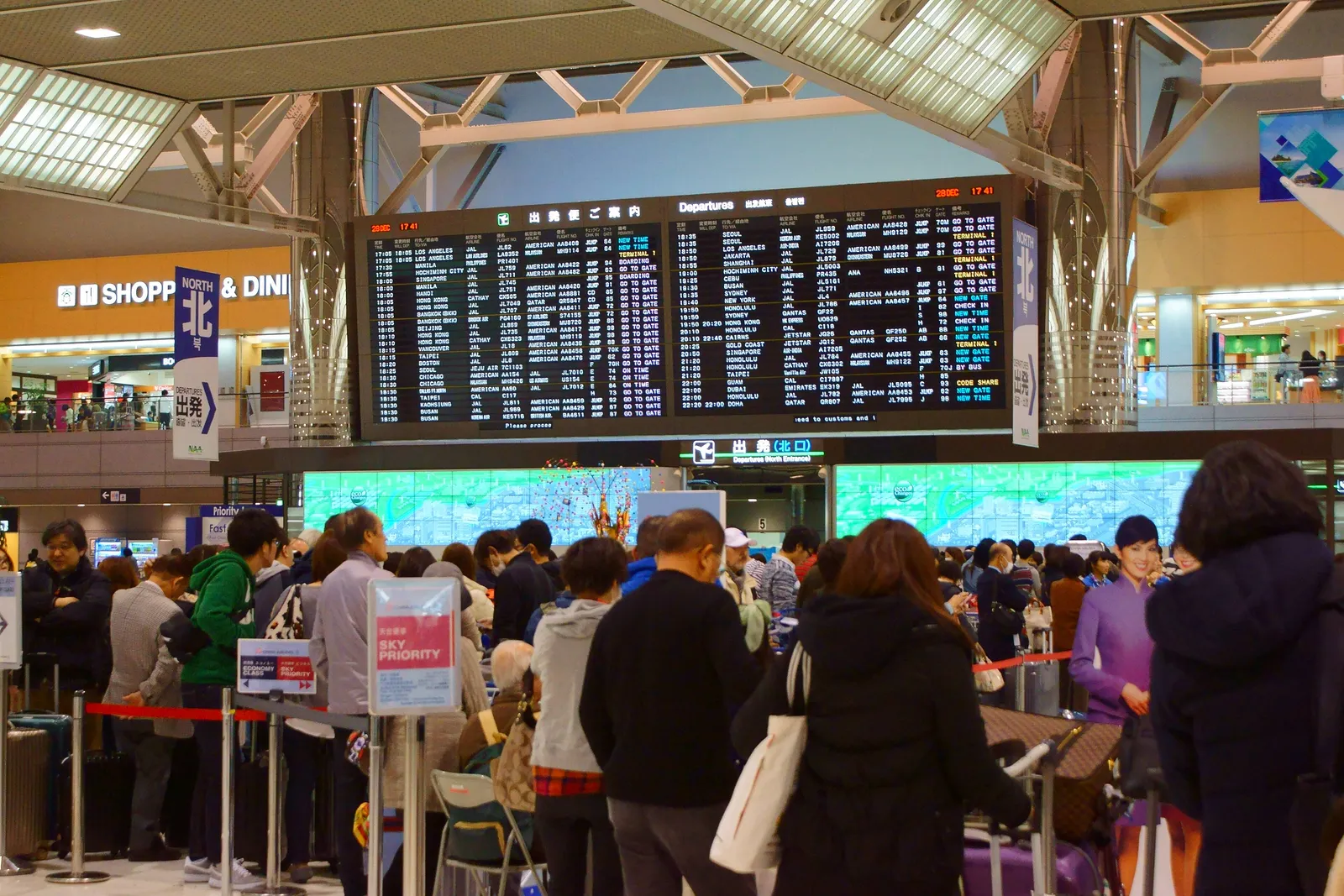

When I first wrote this in November 2025, the government was floating a plan to triple Japan’s International Tourist Tax, the departure charge added to every international air and sea ticket, from ¥1,000 to ¥3,000. The plan went through. The ruling parties wrote it into the FY2026 tax reform outline, and the higher rate has applied to departures since July 1, 2026, with tickets issued before July kept at the old rate.
The stated reason was overtourism. My objection was never to the goal. Managing crowds and attracting visitors who spend more and strain less are sensible aims. My objection is that a flat departure charge is a revenue tool being presented as a crowd tool, and those are different jobs.
What the tax actually does
The tax was introduced in 2019. Revenue reached a record of roughly ¥52.5 billion in fiscal 2024, according to Nippon.com’s summary of government figures, and the government expects it to rise sharply at the new rate. That money is meant to fund tourism infrastructure: airport facilities, multilingual information, maintenance of popular sites and cultural assets.
Those are reasonable things to pay for. But notice what the tax is. It is charged once, on the way out, at the same rate for everyone. It applies to Japanese residents flying abroad as well as to visitors. It does not change where anyone goes during their trip, when they go, or how they behave when they get there.
Crowding is a distribution problem
The problem in Kyoto or at the Fuji viewpoints is not that too many people visit Japan in total. It is that too many of them are in the same few square kilometers at the same hours. I have been caught in the crush in Gion and in Shibuya, and fifteen minutes away from both I have walked through gardens that were close to empty.
A departure tax does not touch that. A traveler who spends a week at a quiet onsen in Tohoku pays exactly the same as one who spends it queueing at Fushimi Inari. An extra ¥2,000 is also far too small to change anyone’s decision to travel. It will not deter the visitor who misbehaves, and it will not attract the high-spending one. It simply makes every trip slightly more expensive.
That is why I think it is fair to call it a revenue measure first. Raising revenue is a legitimate choice. It should be described as one, and it should not be counted as the answer to crowding.
What would target crowding
The tools that address concentration work at the level of places and times rather than borders. Most of them already exist somewhere:
- Reservations and timed entry: popular sites can require bookings, as Machu Picchu has for years, and Venice now registers and charges day-trippers on its busiest days.
- Tiered and peak pricing: charge more for the busiest hours or for premium access, and keep ordinary access affordable.
- Local levies tied to local costs: accommodation taxes set by the city that bears the pressure are a closer fit than a national exit charge.
- Transport and information: tourist-only bus routes, clearer signage and better real-time information about how busy a place is.
- Spreading demand: stop promoting the same handful of spots and put real marketing behind places that want visitors.
The Economics Observatory’s review of visitor caps makes a similar point: the effective measures are about managing where and when people arrive.
Promote the rest of the country
Japan receives more visitors than ever. JNTO counted about 42.7 million international arrivals in 2025, another record. A large share still follow the Tokyo, Kyoto and Osaka route. That is partly a marketing choice.
If the aim is visitors who stay longer and spend more, target them. Promote Kanazawa, Naoshima, Tohoku, Shikoku and San’in in the languages and markets where people already look for food, art, skiing or walking holidays. Invite chefs, architects and editors whose recommendations carry weight, and give them experiences that are hard to find on the usual route. That kind of work is slower than raising a tax, but it changes where people go.
The risk to Japan’s welcome
My larger worry is about tone. Japan’s appeal to visitors rests heavily on hospitality. Small charges that feel like fines, layered on dual pricing debates and tax-free shopping changes, can make a trip feel transactional. A single ¥3,000 charge will not do that on its own. A pattern of charging people without improving their experience could.
The revenue is now arriving. The better test is what it is spent on. If it pays for reservation systems, crowd information, transport in the pressure points and serious promotion of other regions, the tax will have done some good indirectly. If it disappears into general tourism budgets while Gion stays packed, it will have raised money and left the problem where it was.
I would like to see the government report the spending against the crowding problem it cited, place by place. That would turn a blunt instrument into something people could judge on results.
Further reading: tourism in Kyoto: behavior, capacity and clear information · Japan’s reputation and the experience behind it · Japan dual pricing and the case for resident discounts