Japan economy, policy and society
Tourism in Kyoto: behavior, capacity and clear information
Visitor behavior and overcrowding need different responses. Clear rules can help with conduct; transport, timing and destination information affect where crowds form.
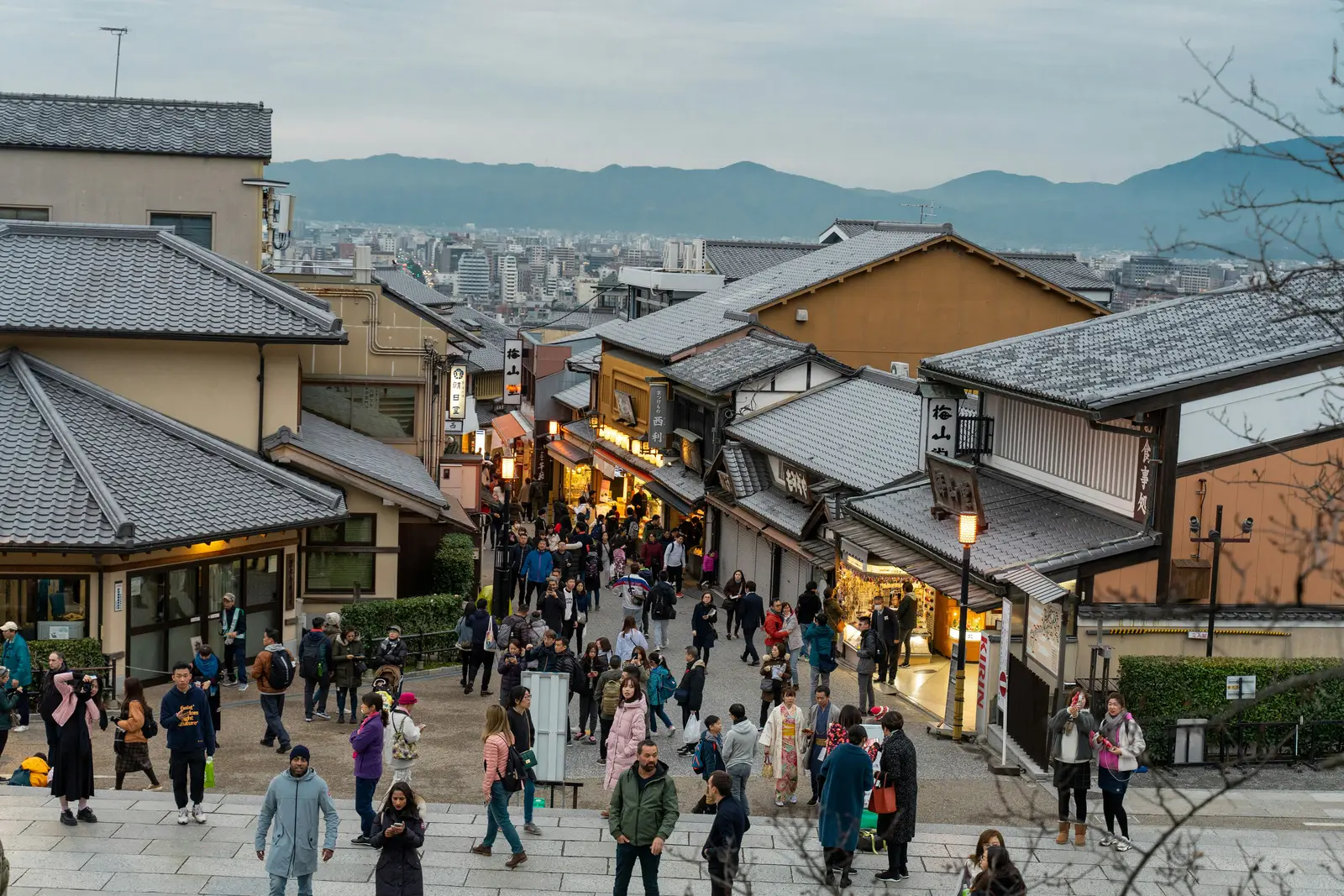
Visitor behavior and overcrowding need different responses. Clear rules can help with conduct; transport, timing and destination information affect where crowds form. A serious approach should distinguish them, and in Kyoto the two problems are often blurred together.
Let me be clear about where I stand on behavior. Chasing geiko and maiko for photos is wrong. Leaving rubbish at shrines is offensive. Being loud in residential streets is a failure of basic courtesy. Visitors should be respectful, and none of what follows is an excuse. What I want to explain is the mechanism, because understanding why it keeps happening is the only way to find something that works.
How a single photo becomes a crowd
Think about how a small lapse spreads. A visitor sees an open moss garden or a quiet lane. There is no sign, no rope and no attendant. They step in for a photo. A local resident may notice and disapprove, but in Japan will very rarely say anything directly. The visitor gets no feedback. Nothing bad happens.
Then the photo goes online, often on a platform or in a language most residents never see. It spreads. The next wave of visitors is no longer wandering by accident. They are coming specifically to recreate that image, sometimes in large numbers and faster than any local arrangement can respond. The one security guard is overwhelmed. The behavior that started as ignorance becomes a pattern.
This is a design problem as much as a manners problem. A fast, distributed network of travelers sharing locations in real time is meeting a system of rules that relies on shared, unspoken understanding and slow, formal responses.
Low-context visitors in a high-context place
Many visitors come from what anthropologists call low-context cultures, where rules are expected to be stated explicitly. If something is off limits, there is a sign or a barrier. Japan leans toward the high-context end, where much of the guidance is implicit and correction is often indirect: a pained look, a polite silence.
The result is a quiet misunderstanding. The visitor is looking for a hard “no” and does not find one. The resident expects the visitor to read the atmosphere and avoids confrontation to preserve harmony (wa). The visitor reads the silence as permission. In New York someone would tell you to move. In Kyoto you are more likely to get a strained smile, and you learn nothing.
The fix is not to make residents confrontational. It is to put the rules where visitors will see them, in languages they read, before they reach the spot.
Why Kyoto feels it most
Kyoto is a working city of about 1.4 million people, not an open-air museum. Its historic districts are small, its streets are narrow and its city buses serve residents who need to get to work, school and hospital. When those buses fill with suitcases and day-trippers, residents feel it immediately.
Japan’s visitor numbers keep rising. JNTO counted about 42.7 million international arrivals in 2025, a record. A large share of first-time visitors follow the same route through Tokyo, Kyoto and Osaka, and within Kyoto they concentrate on a handful of sites at the same hours. The crowding is less about the total than about where and when people arrive.
The responses so far
Local authorities have not stood still, but many of their measures have been reactive:
- Gion: from April 2024, private lanes in parts of the district were closed to tourists after years of complaints about photographers following geiko and maiko.
- Fujikawaguchiko: in May 2024 the town put up a black screen to block a popular Mount Fuji photo spot behind a convenience store. It came down in August 2024 after visitor numbers at the spot fell.
- Kyoto’s lodging tax: from March 2026 Kyoto raised its accommodation tax sharply, with the top tier reaching ¥10,000 per person per night for the most expensive rooms. The city also introduced tourist express buses to relieve regular routes.
Some of these are sensible. A few are closer to tape on a leaking pipe: they block one spot without changing how visitors are informed or how crowds move. A sign only a Japanese reader can understand does not help much.
Where the approach falls short
My criticism of the national approach is that, for years, tourism policy measured success mainly by visitor numbers. The goal was more arrivals, and it was met. The supporting systems grew more slowly: multilingual information, transport capacity at pressure points and clear, visible rules.
There has also been a reluctance to use direct enforcement. Nobody wants the image of a country fining or detaining tourists, and indirect social correction does not reach people who cannot read the cues. That leaves closures and barriers as the default tool.
Promotion has been concentrated too, a pattern tied to how Japan’s international image is built. Japan has 47 prefectures, extraordinary landscapes, food cultures and local history, yet much of the international marketing still points at the same few places. Tohoku, Shikoku and San’in have plenty to offer, and many of their towns would welcome visitors that Kyoto would rather spread out.
What would help
The practical answers are not exotic:
- Explicit rules at the point of decision: clear signs in several languages, marked boundaries and simple icons at the places where problems actually occur. Japan already uses friendly characters to explain rules to its own residents, and the same approach works for visitors.
- Information before arrival: etiquette and site rules in booking confirmations, rail passes, hotel check-in and the apps visitors already use.
- Timed entry and crowd data: reservations at the busiest sites and live information on how crowded a place is, so people can choose another time.
- Transport built for visitors: separate routes and luggage services so residents can use their own buses.
- Genuine promotion of other regions: real investment in making the rest of Japan easy to find and reach. Culture has the same problem: small music scenes stay invisible to visitors when their listings assume everyone is a regular.
What travelers can do
Visitors have a responsibility too. Read the rules before you go. Treat residential streets as residential. Go early or late to the famous sites, or skip one and see somewhere less crowded. Do not photograph people who have not agreed to it. If you are unsure whether something is allowed, assume it is not.
A system under strain
I still believe in travel in Japan. It remains one of the most rewarding places in the world to visit, and visitors are not the enemy. The strain comes from a system that invited far more people than it prepared for. Japan can keep adding barriers after each viral photo, or it can build clear information, better transport and a wider map of places to go. The second option is harder, but it is the one that lets both residents and visitors enjoy Kyoto.
Further reading: why a departure tax does not solve crowded streets · Japan’s reputation and the experience behind it · Japan dual pricing and the case for resident discounts