What Disaster Taught Me About Japan Digital Infrastructure
Matt Ketchum's 2011 experience in Miyako explains the infrastructure mindset behind MKUltraman's work with foreign-owned SMEs in Japan, overlooked industries, analog workflows, and fragile business systems.
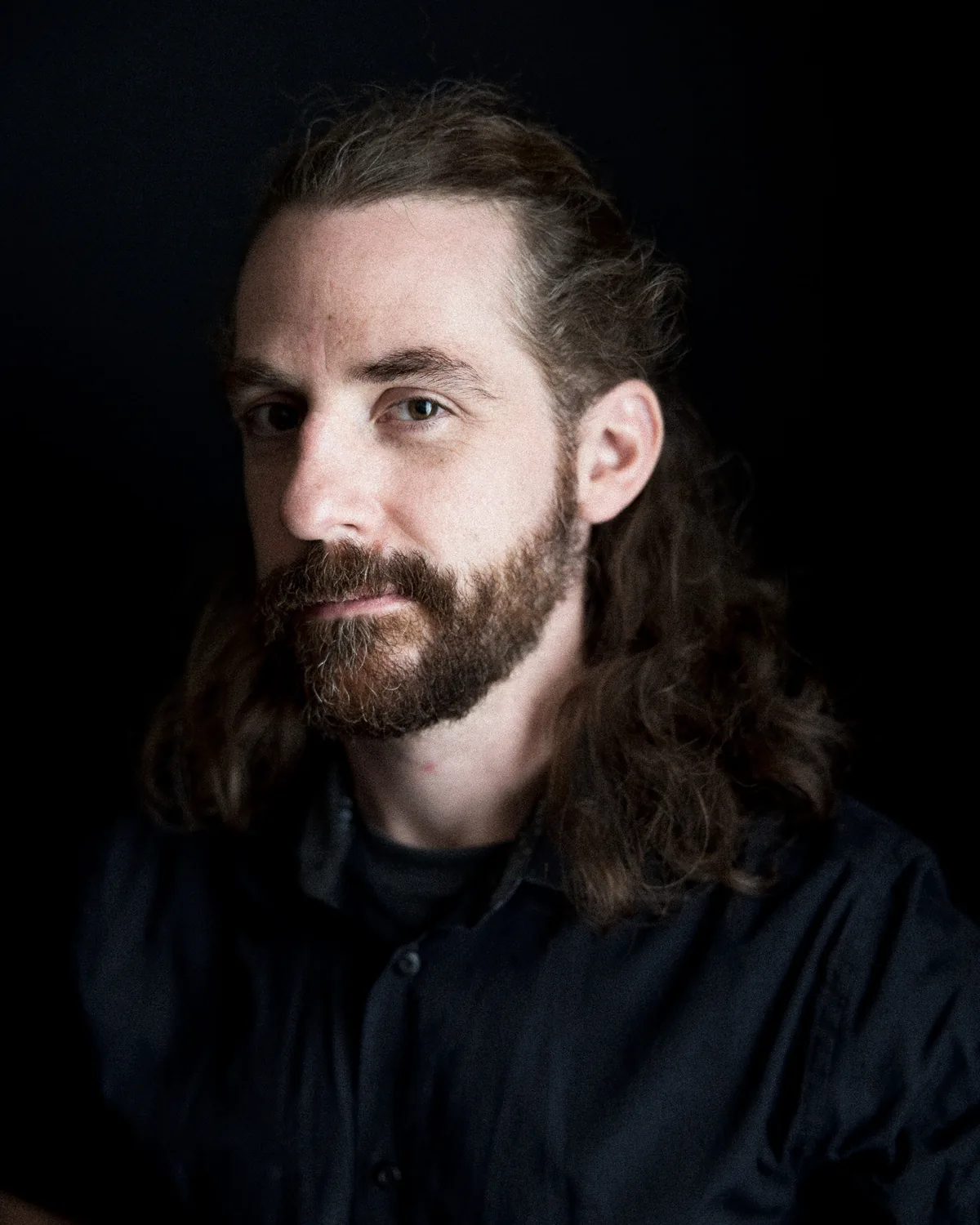
In March 2011, I was in Miyako, Iwate when the Tōhoku earthquake and tsunami changed the shape of the coast.
That is not a clean business anecdote. It is not a neat founder myth. It was physical, local, messy, and irreversible. The ground moved. The sea came in. Assumptions that had felt stable in the morning were useless by afternoon.
Years later, when I talk about digital infrastructure in Japan, people sometimes hear a technical service: websites, data, workflow automation, AI tools, CRM hygiene, content systems, research pipelines. Those are part of the work. But the real work sits underneath the tools.
It is the question Miyako forced into me: what happens when the system you trusted no longer works?
The problem is rarely solved by a better tool. It is solved by knowing the terrain, understanding which signals matter, building systems that can survive contact with reality, and refusing to confuse official visibility with actual value.
That is the through-line from Miyako to MKUltraman.
If you are a foreign founder, managing director, investor, or operator in Japan, this is the real point: the visible software problem is often just the symptom. The expensive problem is usually the unowned system underneath it: mixed-language handoffs, local vendors, undocumented workarounds, paper records, unclear data, and a business stack nobody can fully explain.
Watch the full Career Thoughts Over Coffee episode: He Turned Chaos Into a Career with Matt Ketchum.
Miyako was a lesson in assumptions
Miyako is a coastal city in Iwate Prefecture. During the 2011 Tōhoku earthquake and tsunami, parts of the Sanriku coast saw catastrophic wave heights. The Miyako, Iwate record is blunt: the city was devastated, buildings were destroyed, and the event became part of the area’s modern identity.
I do not treat that as abstract history. I was there.
The experience taught me something that has kept repeating itself in completely different contexts: systems fail first at the gap between the map and the ground.
A seawall is not just concrete. It is a model of expected risk. A warning system is not just a siren. It is a chain of interpretation, trust, timing, and movement. A town plan is not just zoning. It is a bet about how people, roads, buildings, terrain, memory, and habit will behave under stress.
When the stress arrives, the beautiful abstraction gets judged by the ugly details.
Business systems work the same way.
A company says it has a CRM, but the real customer knowledge lives in one salesperson’s LINE history. A town says its vacant houses are tracked, but the useful data is scattered across paper files, neighbor gossip, old maps, and half-maintained municipal records. A food producer says it has distribution, but orders still depend on one person remembering who calls before a holiday. A founder says the website explains the business, but the actual value is buried in years of unstructured experience.
From the outside, the system exists. From the ground, the system is fragile.
That gap is where I work.
Chaos is not the opposite of infrastructure
The Career Thoughts Over Coffee conversation framed this well: chaos became part of the career, not because chaos is romantic, but because chaos reveals structure.
In stable conditions, weak systems can look fine for years. Paper workflows look fine until the person who understands them retires. Vendor relationships look fine until the price changes. A WordPress site looks fine until nobody remembers how it was built. A spreadsheet looks fine until it becomes the only source of truth for a business decision worth millions of yen.
Japan is full of these systems. They are not always broken in an obvious way. Many of them are culturally reinforced, locally functional, and historically rational. That is why generic digital transformation language fails here.
You cannot walk into a Japan SME, rural industry, municipal niche, or family-run operation and say: “move to the cloud.”
Move what? For whom? In what language? Which paper process is actually compliance? Which paper process is just habit? Which data is legally sensitive? Which data is socially sensitive? Which employee is the true API? Which vendor relationship will break if you optimize too aggressively?
Infrastructure work begins when you stop treating the mess as an inconvenience and start treating it as the source material.

Podcast and interview work forces the same discipline as advisory work: make tacit knowledge visible, test the story against lived details, and turn scattered experience into something other people can use.
Japan’s invisible systems are the real opportunity
The industries I keep returning to are not the glamorous ones. Akiya. Rural real estate. Wild game meat. Old supplier networks. Analog SMEs. Local food infrastructure. Under-documented tourism and cultural assets. Businesses where the official database is thin, the English-language internet is useless, and the best information still sits in fragments.
That is not a weakness. It is the opportunity.
The modern internet rewards what is already easy to find. If something has good metadata, clean listings, API access, structured documentation, and obvious search demand, everyone can see it. Capital arrives. Competitors arrive. Automation arrives.
But the parts of Japan that are ignored, offline, miscategorized, or trapped in analog systems have a different shape. They require fieldwork. They require translation between local reality and digital form. They require patience with ambiguity. They require someone to build the map before optimizing the route.
That is why I describe my work this way:
I build infrastructure around the parts of Japan the official system forgot to value.
Akiya is one expression of that. The Unpacking Japan conversation goes deeper on why abandoned Japanese buildings are a data and trust problem before they are a real estate opportunity. So is digital advisory for foreign-owned SMEs in Japan. So is helping a business replace fragile paper processes without destroying the relationships those processes quietly support. So is taking an overlooked niche and turning it into a durable dataset, content system, operating workflow, and market position.
This is not “AI consulting” in the shallow sense. AI is useful when the surrounding infrastructure is strong enough to make it useful. If the data is dirty, the workflow is imaginary, and nobody owns the output, AI just accelerates confusion.
The lesson for business: build before the wave
Disasters make resilience visible. Business usually hides the same lesson because the failure happens slowly.
A company does not collapse in one dramatic wave. It loses institutional knowledge one retirement at a time. It lets a website rot one plugin update at a time. It trains customers to expect manual workarounds one exception at a time. It lets its data become untrustworthy one copy-pasted spreadsheet at a time.
Then one day a founder wants to sell, expand, automate, hire internationally, use AI, franchise, raise money, or pass the business to the next generation, and the underlying system is not ready.
The wave was not sudden. It was just finally visible.
The practical response is not panic. It is infrastructure:
- Map the real workflow, not the official one.
- Identify where knowledge lives: people, paper, software, vendors, customers, local context.
- Separate constraints from habits.
- Convert fragile tacit knowledge into reusable documents, datasets, checklists, and decision rules.
- Choose tools only after the operating reality is understood.
- Build ownership into the system so it does not depend on one heroic person remembering everything.
That is the same logic behind a Technology Health Check. Before buying another subscription, rebuilding a website, deploying AI, or replacing a workflow, you need to know what the current system is actually doing.
Local knowledge beats central abstraction
One of the hardest lessons from disaster environments is that official information and local knowledge are not substitutes for each other.
Official systems matter. They coordinate response, set standards, publish warnings, and create shared references. But local knowledge explains the shortcuts, the weak points, the trust networks, the old assumptions, the places where the map lies, and the details that only become important under pressure.
Japan’s business environment works the same way.
A foreign company can read market reports and still misunderstand how decisions are made. A software vendor can localize the interface and still miss the workflow. A consultant can recommend best practices and still fail because the recommendation ignores hanko culture, accounting habits, bilingual staff constraints, vendor inertia, or the quiet power of the one person who has “always handled that.”
Digital infrastructure in Japan has to respect local reality without becoming trapped by it.
That means asking better questions:
- What is the paper doing socially, not just administratively?
- Which process exists because of law, and which exists because nobody challenged it?
- Where does the customer actually experience friction?
- What data would make this market visible for the first time?
- Which analog practice should be preserved, and which one is just decay with etiquette?
Those questions are slower than a software recommendation. They are also the difference between transformation and theater.

Resilience is not built from abstractions. It is built by understanding terrain: physical, cultural, operational, and digital.
What MKUltraman actually builds for Japan SMEs
MKUltraman exists because Japan has a huge amount of under-mapped value.
Some of that value is cultural. Some is industrial. Some is geographic. Some is trapped inside companies that know their craft but never built the digital layer around it. Some is hidden because English-language search cannot find it. Some is ignored because the official data is thin or outdated.
My job is to turn that overlooked reality into usable infrastructure.
Depending on the client or project, that can mean:
- Auditing a Japan SME’s software stack and replacing duct-taped workflows with something maintainable.
- Turning scattered internal knowledge into documentation, content systems, and decision tools.
- Building datasets around markets that do not have clean public data.
- Designing AI-assisted workflows that respect Japan-specific constraints instead of pretending every market works like San Francisco.
- Translating between local Japanese operating reality and foreign founder, investor, or managing-director expectations.
- Creating public-facing content that makes an ignored niche visible without flattening it into tourist cliché.
The work is technical, but the technical part is downstream of the worldview.
If Miyako taught me anything, it is that resilience is not a slogan. It is a built condition. It is what remains when the assumption breaks.
The business version of preparedness
Preparedness is not paranoia. It is respect for reality.
For a Japan business, preparedness might look like clean documentation, bilingual process notes, a CRM that actually reflects customer relationships, a website that explains the business clearly, a vendor map, a data backup, a migration plan, or a workflow that survives when one person is unavailable.
For an overlooked industry, preparedness might mean building the dataset before the market wakes up. It might mean documenting suppliers, locations, regulations, buyer behavior, and local constraints while everyone else still thinks the niche is too small to matter.
For a foreign-owned SME, preparedness might mean understanding which Japan-specific systems are worth adapting to and which ones are just legacy friction.
None of this is glamorous. That is the point. Real infrastructure usually becomes visible only when it is missing.
Miyako made that lesson impossible to ignore. MKUltraman is where I keep applying it.
If you are operating in Japan and suspect your business is held together by undocumented workarounds, inherited paper systems, tool sprawl, local vendor dependencies, or knowledge that only exists in people’s heads, start there. Map the system. Find the hidden dependencies. Build the digital layer around the real business, not the fantasy version in the org chart.
For owner-led or foreign-owned teams, that usually starts with a Technology Health Check or a review of your digital infrastructure as a foreign-owned SME in Japan: what tools you run, what they cost, who owns them, where the workflow breaks, and what should be fixed before you buy another platform or ask AI to clean up the mess.
That is where the value is.
And in Japan, there is still a lot of value the official system forgot to see.
Related reading: Akiya Are a Data Problem Before They Are a Real Estate Opportunity · How to Kill the Fax: A Migration Path for Japan Businesses Still Running on Paper · When digital tools preserve an analog process · Technology adoption in Japan fails at procurement