Digital transformation, paper and legacy systems in Japan
Why good Japanese businesses are hard to find, trust and buy from
Japan does not lack innovation. It lacks interfaces: websites, booking, data and processes that let customers find, trust and act. How to fix yours.

Many good Japanese businesses are hard to work with from the outside because the layer between their value and the customer is weak: an outdated website, booking by phone during office hours, prices and terms buried in PDFs, customer history in one person’s head. Japan does not lack innovation or quality. It lacks interfaces, meaning the websites, booking and payment flows, structured data and internal processes that let people find something, trust it and act on it. Fixing that interface is often the highest-return digital work a Japanese SME can do.
People like to say Japan has an innovation problem. I do not think that is quite right. Japan has useful products, serious craftspeople, stubborn engineers, regional food producers, overlooked factories, independent venues, local tour operators and family businesses that know how to make things work under constraints. A lot of that value sits well below the polished corporate layer, in places that look too small, too local or too analog for the official system to explain.
Often you cannot find it. Or you find it but cannot tell whether it is real. Or you can tell it is real but cannot book it, buy it, compare it, reach the right person or understand the terms without a trail of PDFs, phone calls and half-updated pages. That is where a great deal of value gets stuck.
What is a business interface?
An interface does not have to be an app. It can be a website, a booking flow, a bilingual inquiry form, a database, a map, a well-kept spreadsheet, a public directory or a documented process that reliably turns scattered information into a clear next step. It is the layer between the value and the person trying to act on it.
A town can have excellent guesthouses, but if booking means calling during office hours and hoping someone understands you, the interface is weak. A food producer can make excellent product, but if order history lives in one person’s memory, the interface is weak. A business can be good and still be hard to work with, and a market can be full of value and still look empty from outside.
That gap changes who participates. Serious buyers leave when they cannot verify basic facts. Investors leave when the data is too thin to judge risk. Foreign customers give up when the process feels like an endless courtesy maze. Local staff lose hours answering the same questions because the public information was never structured. The most patient people win, but patience is not the same as a working market.
Why are akiya a good example?
Vacant houses (akiya) make the interface problem easy to see. From outside, the story sounds simple: Japan has abandoned houses, some are cheap, towns want new residents, so the market should work.
Then you touch the system. Listings are incomplete, photos inconsistent and ownership sometimes complicated. Renovation costs are hard to estimate from public information. Local builders may be busy, retiring or uninterested. Municipal records vary widely, and some viable properties never reach a searchable listing at all.
Co-founding Akiya & Inaka meant scraping, cleaning and structuring property data as well as client searches, inspections and local coordination. That work made it clear that the house is only part of the product. The rest is condition, ownership clarity, local relationships, a renovation path and a way to move from interest to decision honestly. When that interface is missing, good properties stay invisible and weak ones get romanticized. I go further into this in akiya are a data problem before they are a real estate opportunity.
How does the same problem show up inside an SME?
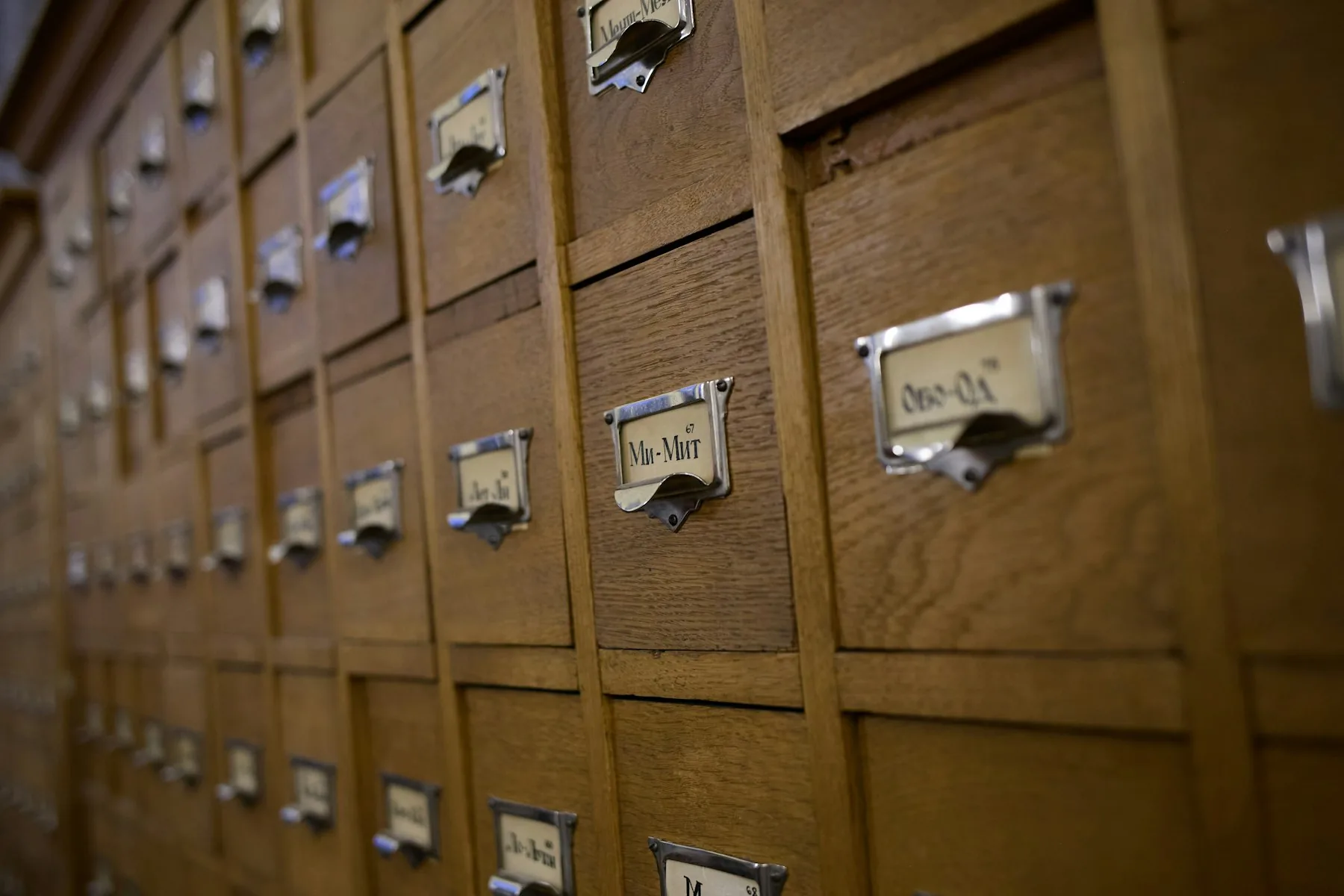
A Japanese SME can have real customers, history and expertise while being nearly impossible to understand from the outside. The website says one thing and the sales process another. The CRM is half used. Customer history lives in email, LINE, Chatwork, notebooks and staff memory. Pricing exceptions were never written down. The English page translates an outdated Japanese page, and neither reflects what the company sells now.
Nobody set out to build a bad interface. A tool was added because someone needed it. A spreadsheet survived because it was familiar. A vendor kept billing because nobody owned the renewal. From inside, the business runs. From outside, the value is foggy.
This is why so many DX projects turn into theater. The company buys software before it understands the interface it needs, the staff work around it, and the operating reality barely changes. I cover that pattern in why DX projects in Japan fail before the software arrives.
Why does a weak interface damage reputation?
A bad interface does not just slow people down. It changes what people believe about the thing behind it. If a municipal akiya bank is hard to search, outsiders conclude there are no good properties. If a restaurant cannot be reserved online, tourists assume it is inaccessible. If a manufacturer’s website is weak, buyers assume the company is not serious. If a cultural site has no useful English page, visitors either miss it or meet a flattened influencer version.
In Japan a poor website does not necessarily mean a poor business, and a paper process does not necessarily mean incompetence. But customers act on what they can see. The interface becomes the reputation.
Video: Paperwork in Japan: The battle to end faxes and ‘hanko’ seals from FRANCE 24 English.
What does a better interface look like for a Japanese business?
A good interface shortens the distance between reality and action. For most SMEs that means a handful of concrete fixes:
A website that reflects the real offer. Current services, clear prices or price ranges where possible, real photos, and an English page that matches the Japanese one if you serve foreign customers.
A direct path to act. Online booking or an inquiry form instead of phone-only contact, and payment methods customers expect: cards and QR payments such as PayPay alongside bank transfer. The guide to accepting payments in Japan covers the options.
Structured information. Products, locations, availability and terms kept in one maintained place, whether a CMS, a kintone app or a well-kept spreadsheet, rather than scattered across PDFs.
Internal systems that match the process. A CRM or shared inbox that reflects how you actually sell, bilingual notes that make handoffs less fragile, and a vendor map showing who owns what.
For an overlooked industry, a better interface can mean building the first useful dataset: who exists, what they do, where, and what customers need to know. For a foreign-owned company, it often means translating between Japanese administrative habits and the English-language customer journey the business needs.
The thread through my own projects
The same instinct runs through my independent work: go where the official system never built the map. JaCamp turns scattered campground information into a structured English-language directory with booking links and difficulty notes. Music in Japan gives independent music, from heavy metal venues to small events, a searchable public home. Akiya & Inaka did the same for rural property.
The advisory work asks the same questions. Where does knowledge live? What cannot be found or trusted? Which process depends on one person? What does the customer see, and how far is that from the real value of the business? Those questions come before AI, automation, a website rebuild or a new CRM. If the interface is broken, every new tool inherits the break.
Build the interface around what is already there
Japan does not need to flatten its local systems into generic global software culture, or turn every craft, town and family business into a startup pitch. The value is often in the specificity and the accumulated local knowledge. But if that value cannot be found, trusted or acted on, it keeps leaking opportunity. The job is to build an interface honest enough to hold the messy parts.
If your business depends on undocumented workflows, scattered records, bilingual handoffs or a website that no longer matches what you sell, a Diagnostics review maps where the interface breaks. If you already know you need a new site, booking or payment flow, I can build and connect it with your team.
Further reading: what the 2011 tsunami taught me about business systems · what a startup accelerator’s own systems tell founders · what a company website reveals about the business behind it